Press ESC or click anywhere outside to close

3 in 1 Pool Dehumidification Heat Pump

Control indoor pool humidity while recovering usable heat for room air and pool water. One coordinated unit helps pool contractors reduce separate equipment, simplify plant-room planning and protect the building from persistent moisture.

Dehumidification Air Heating Pool Water Heating

See where the recovered heat goes

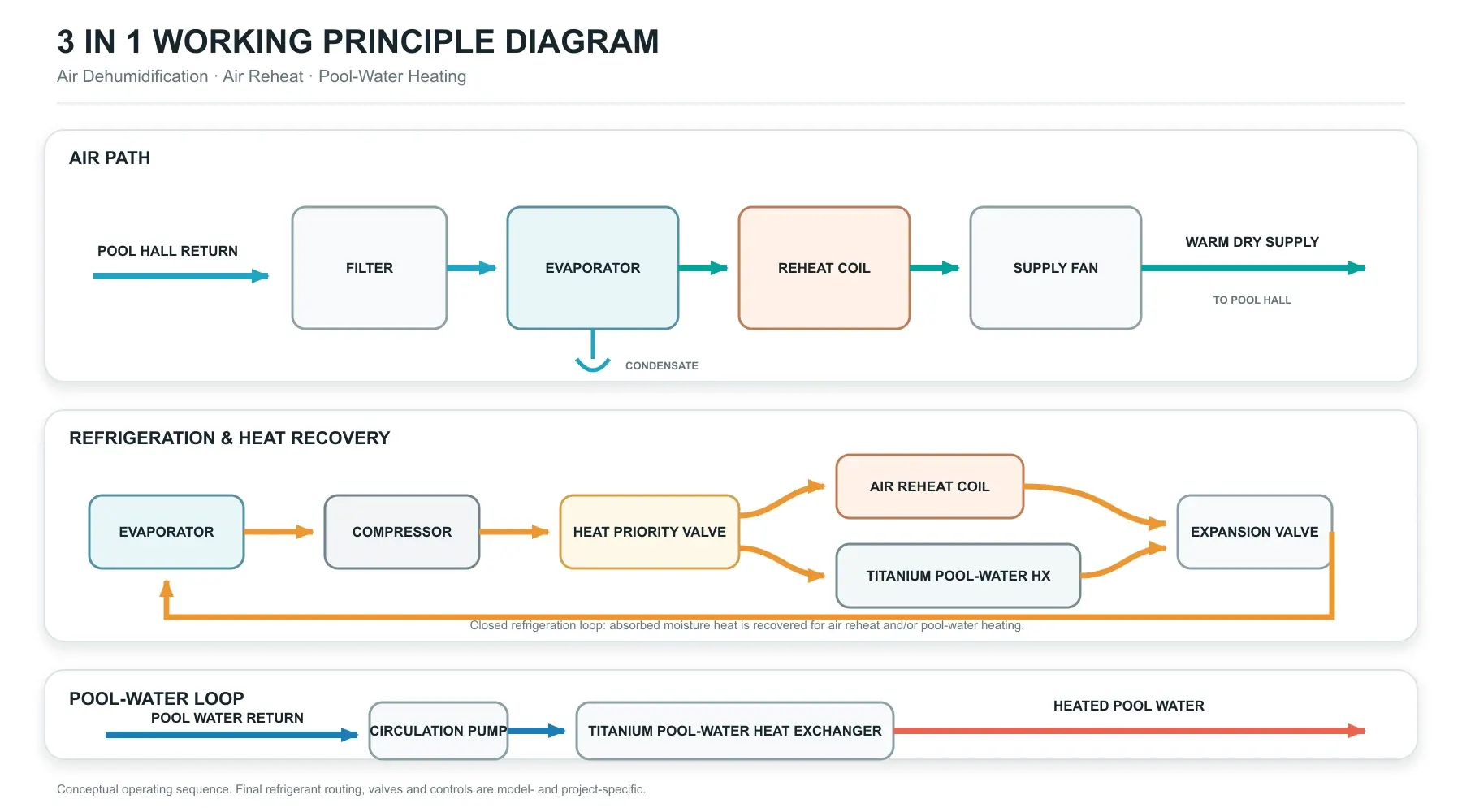
Instead of explaining heat recovery only with text, use one clear working-principle diagram to show the complete moisture and energy path.

1 Humid return air enters the unit and moisture condenses.
2 Recovered condenser heat reheats dry supply air or supports pool-water heating.
3 Auxiliary heat covers demand that exceeds available recovered capacity.
3 in 1 pool dehumidification heat pump working principle diagram

Actual savings depend on climate, operating hours, evaporation load, control strategy, utility rates and the baseline system.

Three functions, one useful energy path

The unit removes latent moisture first, then uses recovered heat where the project needs it instead of treating dehumidification and heating as unrelated systems.

01

Dehumidification

Humid return air passes across the refrigeration circuit so water vapour condenses and drains away.

Result: controlled room dew point and reduced condensation risk

02

Air Heating

Recovered condenser heat can reheat the dry supply air to support stable room temperature and comfort.

Result: dry air returns without an unnecessary cold-air effect
03

Pool Water Heating

Available heat can be transferred through the water-side circuit to offset part of the pool heating demand.

Result: more of the extracted energy stays useful inside the facility

Control priority is configurable. Final heat allocation depends on room load, water load, piping design and the selected model.

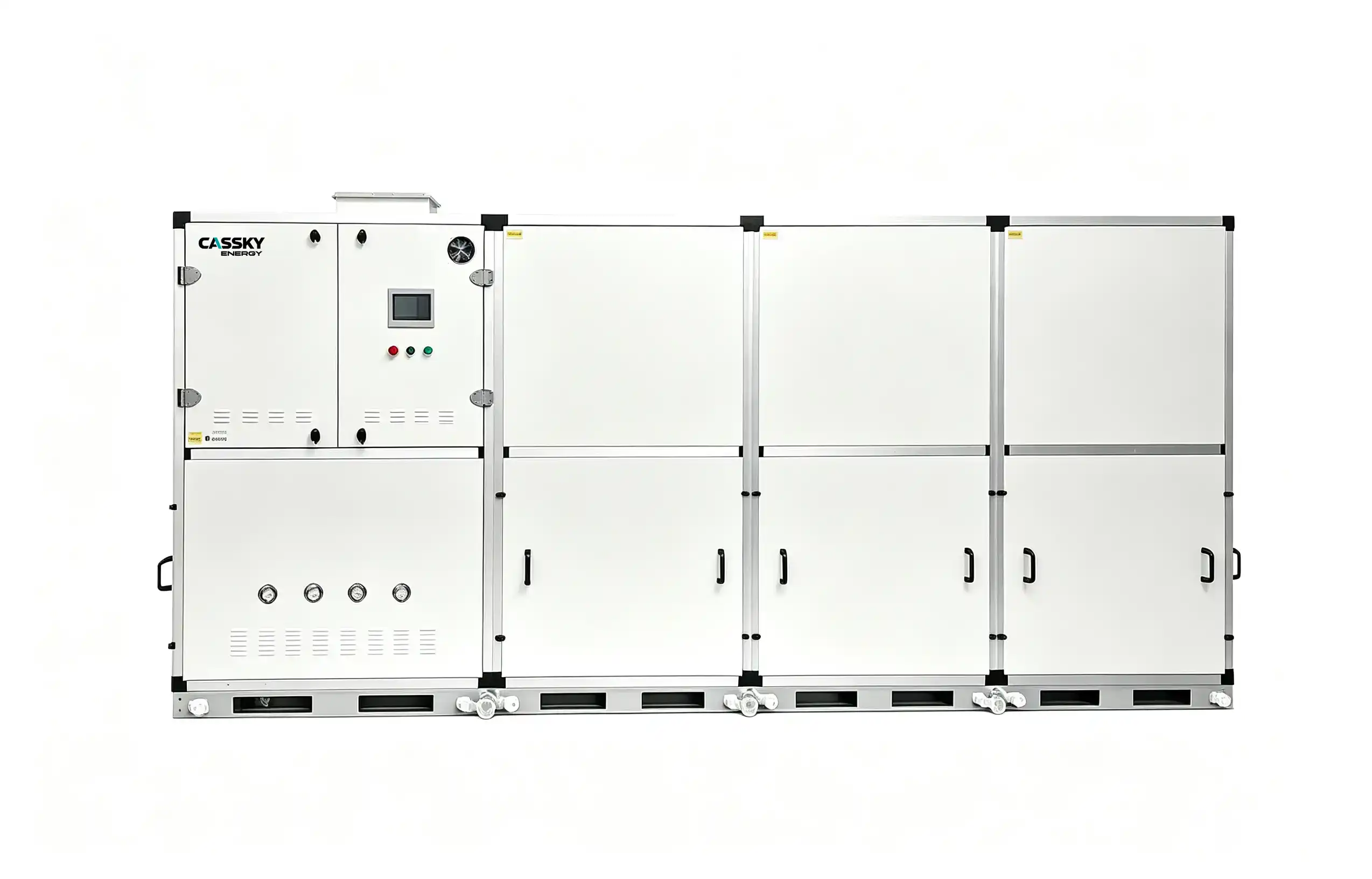
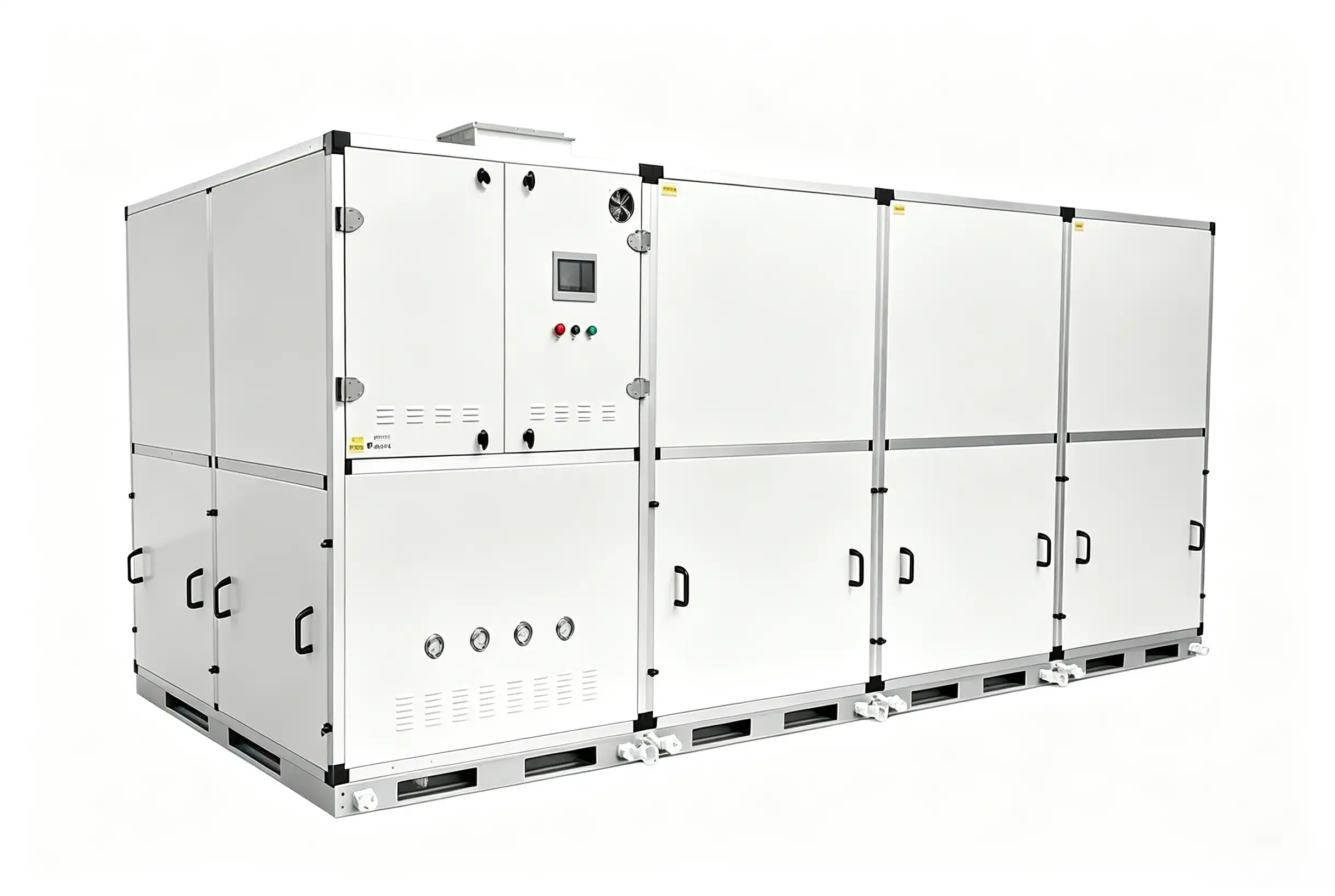
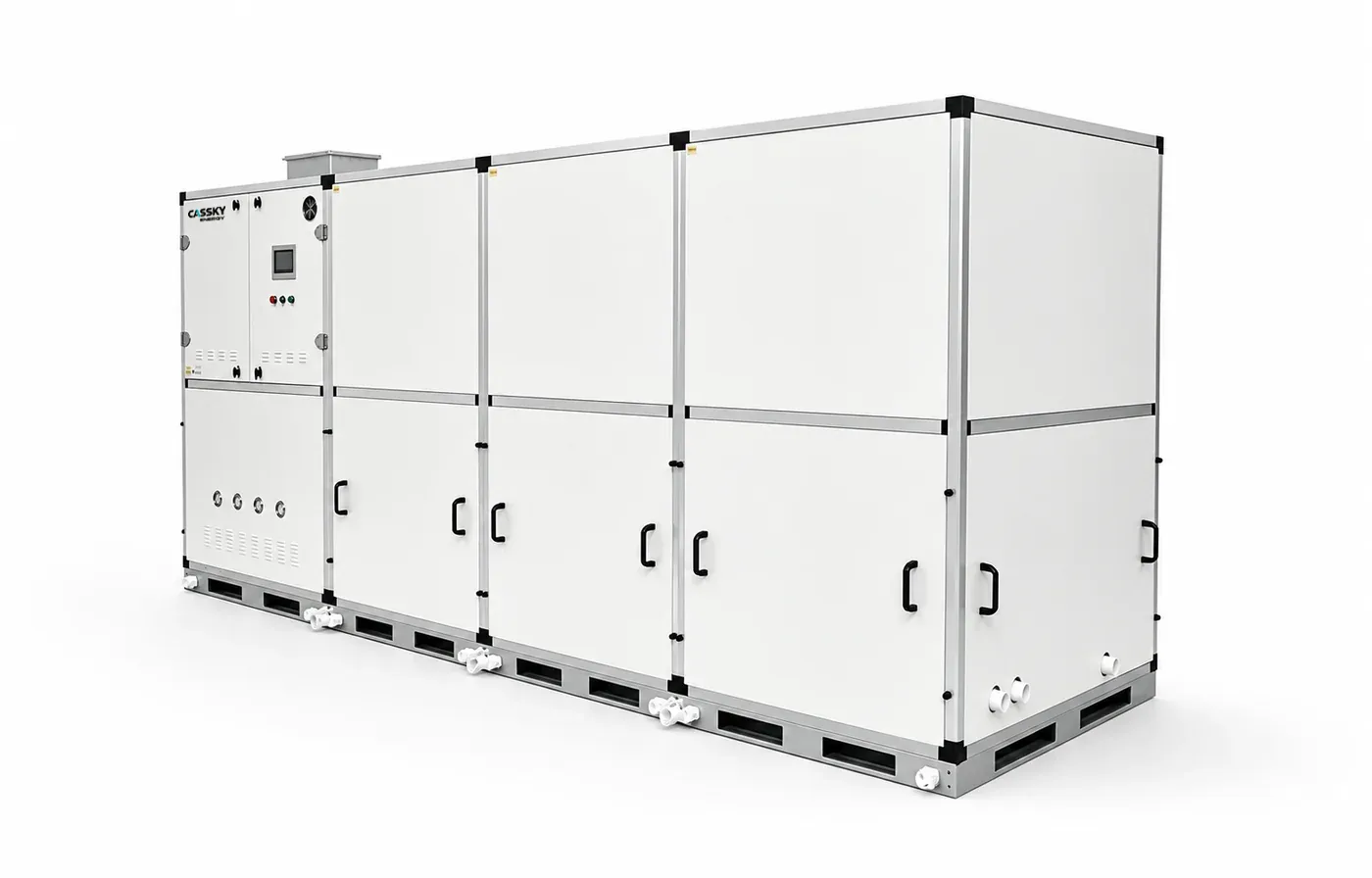
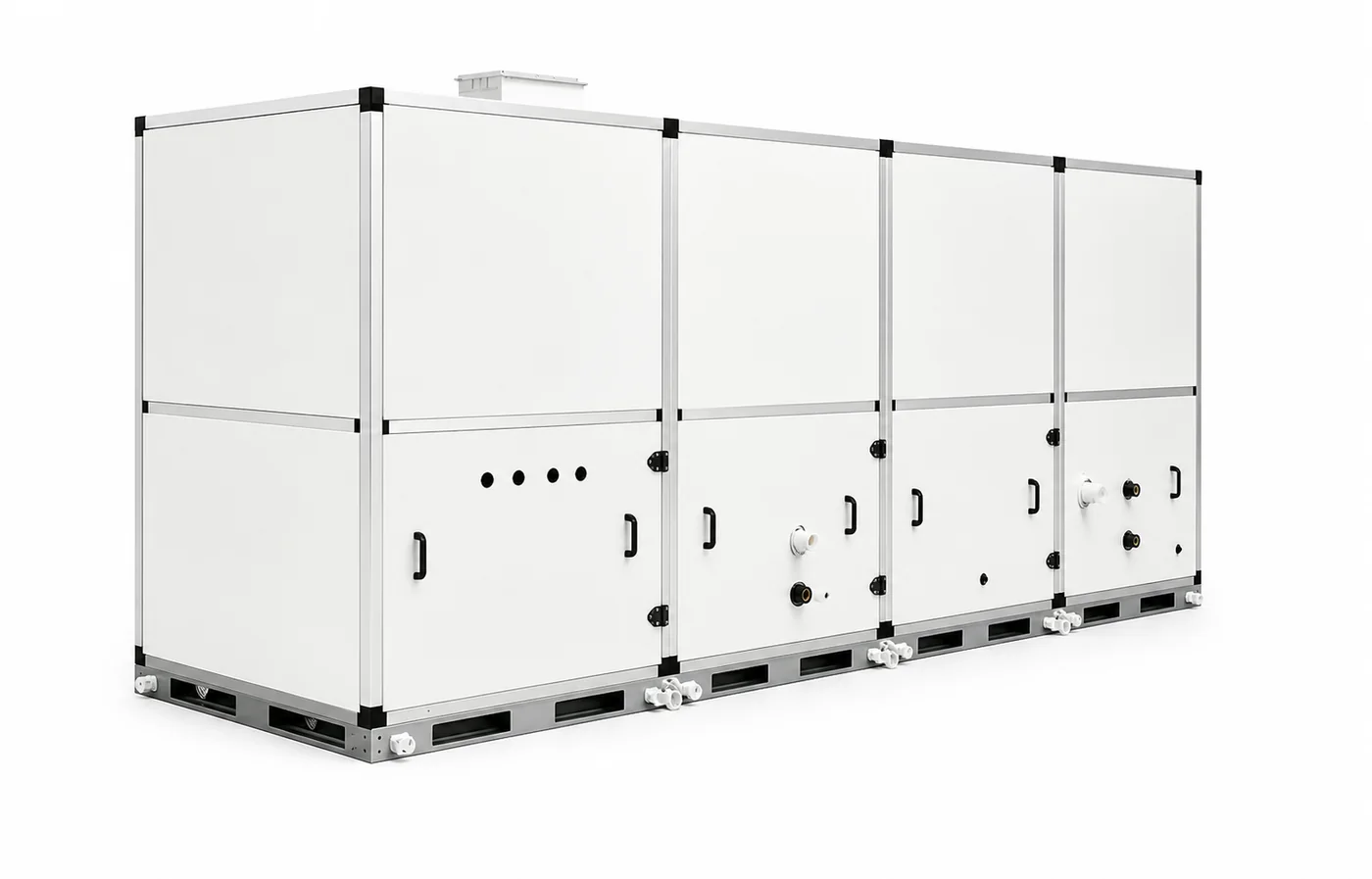
Swimming pool heat pump structure

Use three large images so buyers can clearly understand the cabinet, service access and intended air/water connections without opening a separate brochure.

Complete Heat Pump Unit

Compact Main Unit

Show casing dimensions, access panels, duct connections and the installation orientation.
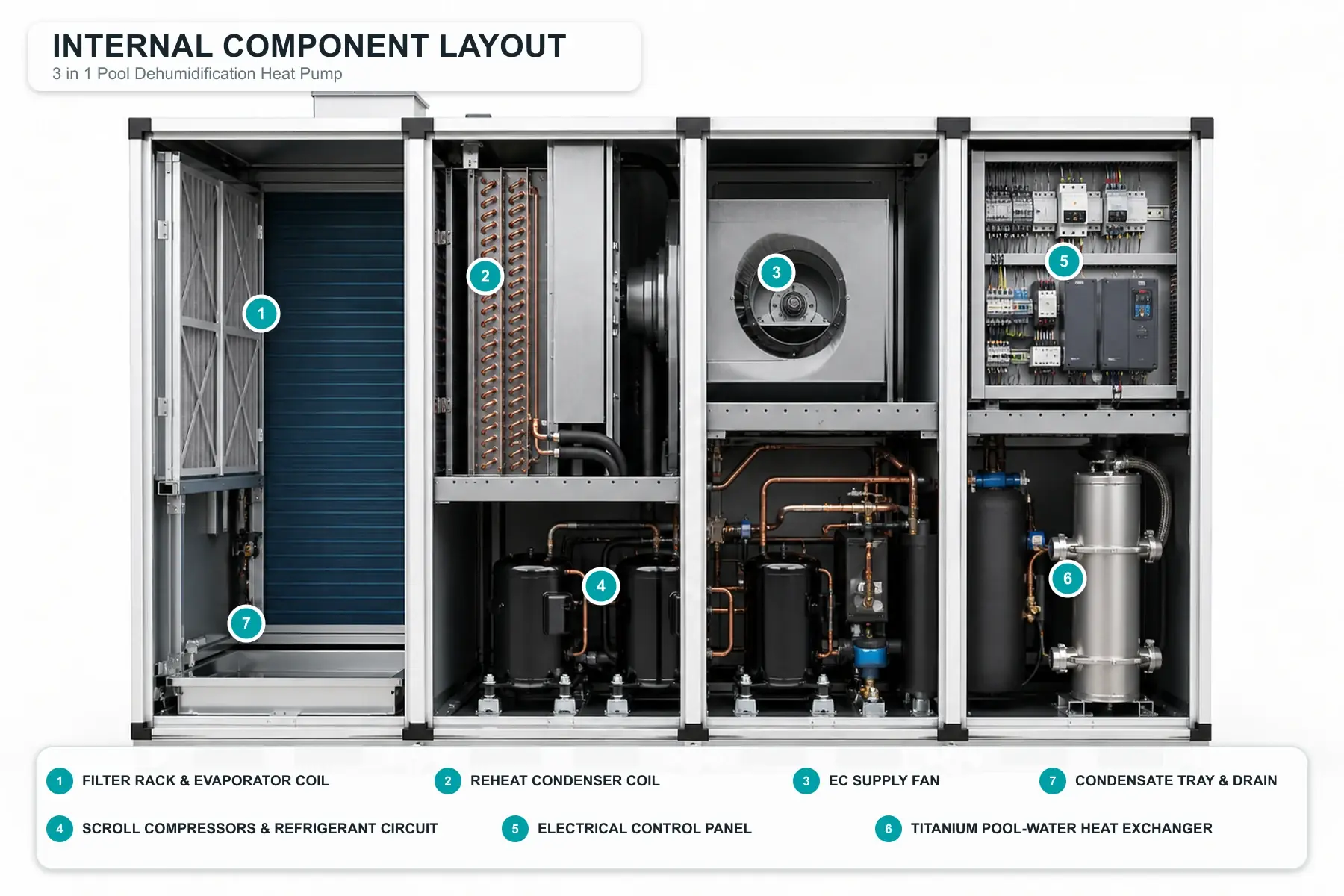
Internal Component Layout

Serviceable Structure

Identify fans, coils, filters, compressor section, drain pan and electrical compartment.
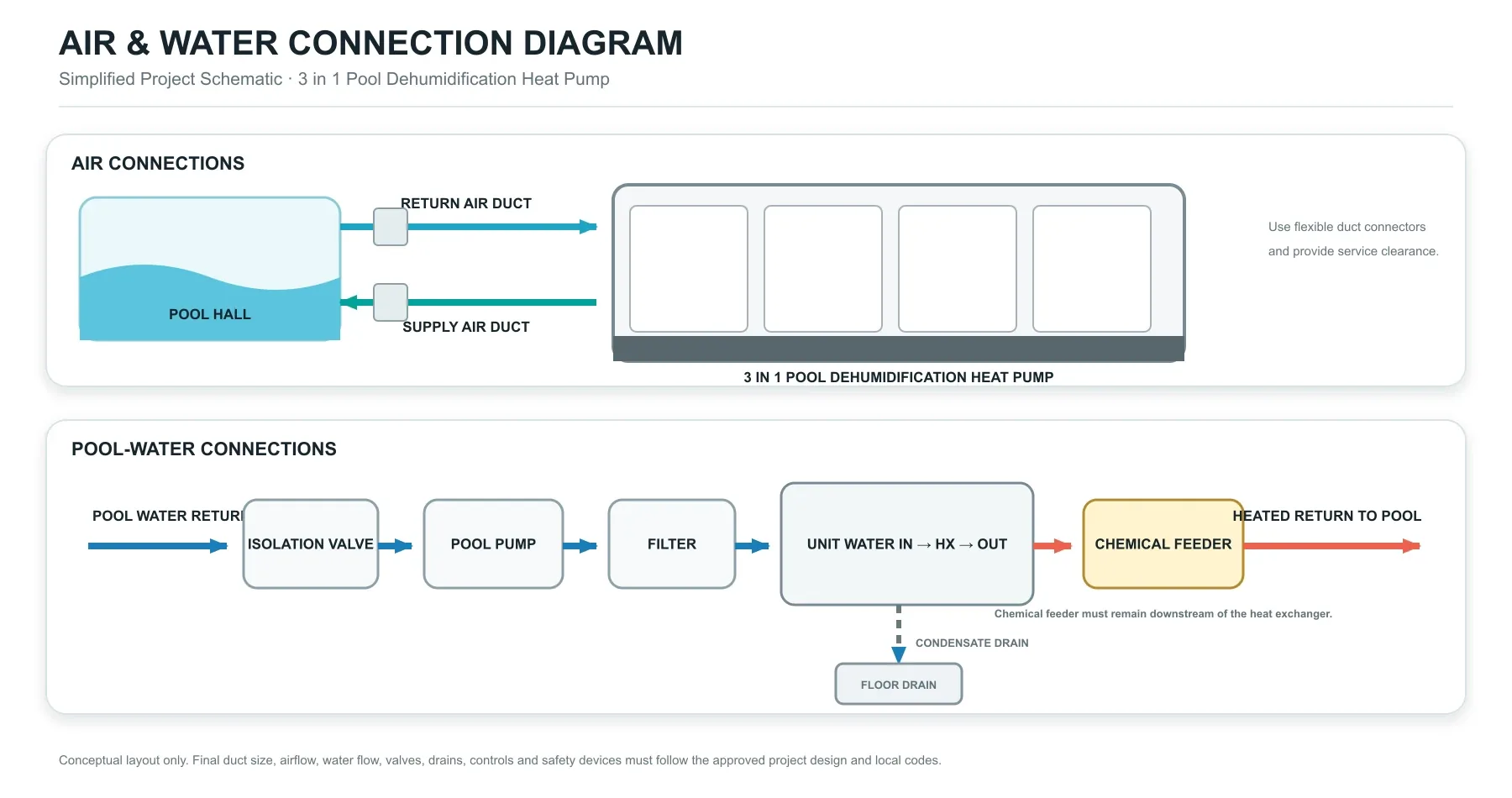
Air and Water Connection Diagram

Clear System Interface

Illustrate return/supply air, condensate drain and pool-water heat-exchanger loop.

Image labels should be updated to match the final model configuration. Avoid showing components or connection positions that are not supplied.

Select from the evaporation load—not floor area alone

Two pool halls with the same area can have very different moisture loads. A useful quotation starts with the pool, room and operating conditions.

Pool cover matters: provide occupied and unoccupied schedules separately. A properly used cover can materially change the night-time evaporation load.
Six inputs for preliminary model selection
01Pool surface areaLength, width and any connected spa
02Water conditionDesign temperature and treatment type
03Room conditionAir temperature and target relative humidity
04Activity factorPrivate, hotel, fitness or therapy use
05Operating scheduleOccupied hours, cover use and setbacks
06Site informationClimate, room volume, glazing and power

Send these inputs with drawings for a preliminary capacity and airflow recommendation.

Submit Pool Data →

Preliminary selection range

Use this table as editable landing-page data. Replace every starred value with the final model table, rated conditions and certification scope before publishing.

Dehumidification Capacity*
5–30 kg/h
Nominal Airflow*
1,500–8,000 m³/h
Pool Water Heating Capacity*
10–60 kW
Air Heating Capacity*
12–70 kW
Available External Static Pressure*
200–500 Pa
Humidity Control Range*
50–70% RH, project setpoint
Control / BMS*
Touch controller; RS485 / Modbus optional
Refrigerant
Confirm by selected model and target market

Typical Projects

  • Private indoor swimming pools
  • Boutique hotels and villas
  • Small fitness and wellness facilities
  • Therapy or rehabilitation pools

OEM & Project Support

Discuss casing, airflow direction, controller interface, branding, documentation and market-specific electrical requirements against a defined order and certification scope.

Request Datasheet & OEM Review →

* Preliminary reference values for page layout only; not a performance guarantee. Capacity changes with entering air, water temperature, airflow and operating mode.

3 in 1 Pool Dehumidifier FAQ

Answers for contractors, consultants and project buyers comparing indoor pool humidity-control systems.

How is the correct dehumidification capacity selected?
Selection should be based on calculated evaporation, not room area alone. Provide pool surface area, water and room temperatures, target RH, activity level, occupancy schedule, cover use, climate and room volume. Airflow and duct static pressure must also be checked.
Can recovered heat maintain the pool water temperature by itself?
It may offset a substantial part of the water-heating load, but whether it covers the full load depends on moisture generation and simultaneous water losses. The system designer should retain suitable auxiliary heat where peak or start-up demand exceeds recovered capacity.
Does a 3 in 1 unit replace the project ventilation system?
No. This product focuses on recirculating-air dehumidification, air heating and pool-water heating. Required outdoor air, exhaust, pressure control and code compliance remain part of the ventilation design. For integrated fresh air and exhaust management, compare the 5 in 1 series.
Where should chemical dosing and water connections be located?
Follow the approved hydraulic schematic. Chemical dosing is normally arranged downstream of heating equipment, with compatible materials, correct flow, filtration and an independent circulation arrangement where required. Final positions must follow local codes and the supplied manual.
What OEM options can be discussed?
Depending on volume and certification scope, options can include logo and colour, cabinet arrangement, airflow direction, controller interface, packaging, manuals and electrical configuration. Send the target market, annual quantity and mandatory standards for feasibility review.
Have pool data or drawings ready? We can review the latent load, airflow and water-side requirements before quotation.
Start Project Review →

Partner With Cassky for Reliable Clean Energy Solutions

Cassky specializes in high-performance heat pump systems and solar energy solutions, providing reliable products and customized services for global distributors, engineering companies, contractors, and brand partners.

1. Distributors & Dealers Build long-term partnerships with reliable heat pump and solar energy products, competitive supply capability, and professional support.
2. Engineering Companies & Contractors Get technical assistance, project solutions, and product recommendations for residential and commercial energy projects.
3. OEM / Brand Partners Access customized manufacturing, private label solutions, and flexible cooperation options for your market.

Request a Quote

Tell us about your product or project requirements. Our team will contact you to discuss the next step.