
Nominal Condition
A20/W80
32 kW
Heating capacity
11.43 kW
Input power
2.8
COP
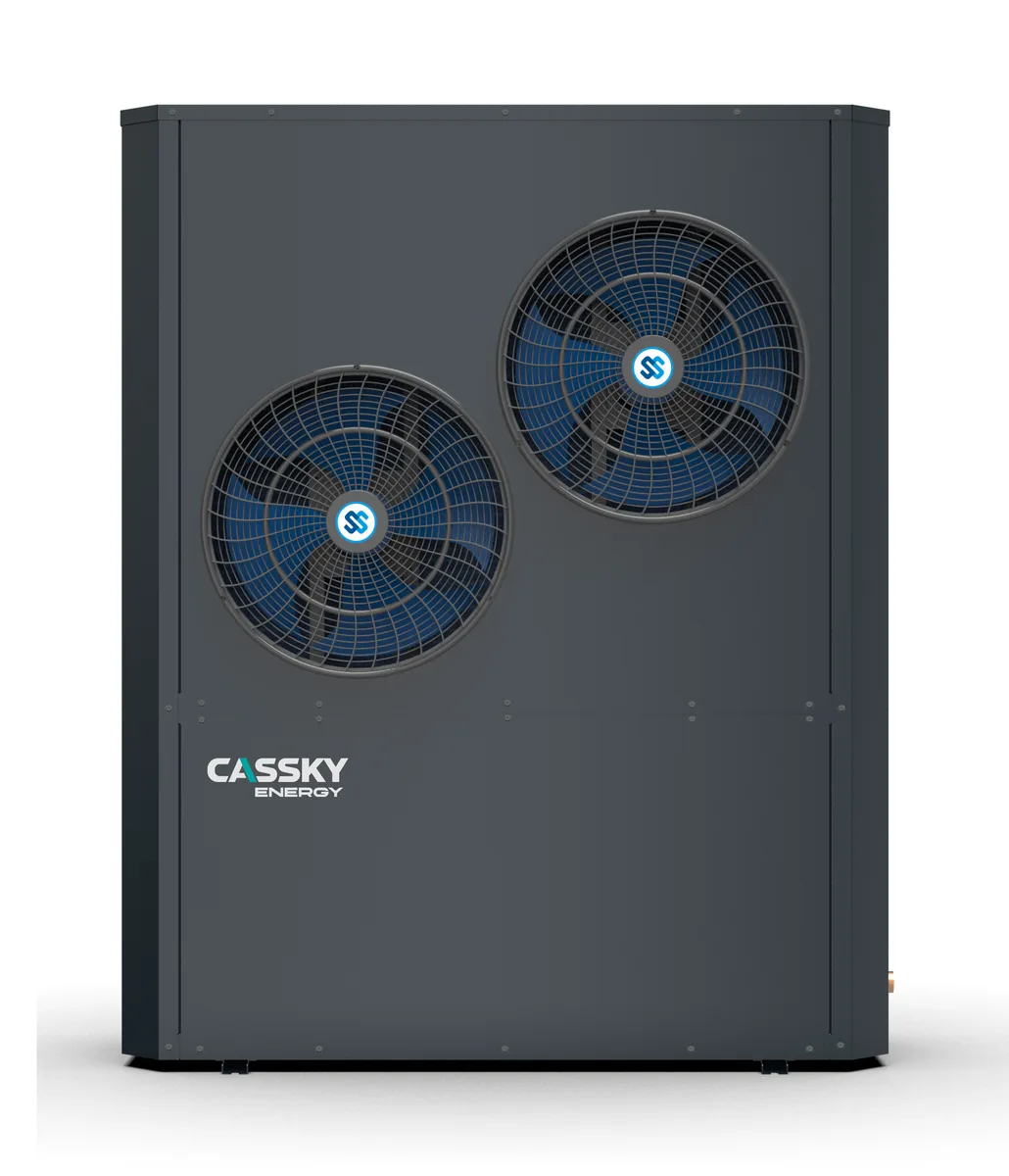
Industrial high temperature heat pump produce process hot water up to 85°C for industrial cleaning, washing, dyeing, surface treatment, processing and heat-tracing systems. The unit combines variable-frequency control with cascade heating for dependable operation from −36°C to +43°C ambient.
Performance varies with ambient, inlet and outlet water temperatures. R32 and R290 are supplied as separate product versions; final availability is confirmed for the selected market.
Compare heating capacity, input power and COP at the same 80°C outlet-water condition. The three published operating points help project engineers evaluate performance as outdoor temperature falls.
32 kW
Heating capacity
31 kW
Heating capacity
30 kW
Heating capacity
The cascade architecture divides a large temperature lift into coordinated stages. Variable-frequency control adjusts output as ambient conditions and hot-water demand change.
The outdoor heat exchanger absorbs low-grade heat from ambient air, including under low-temperature operating conditions.
The first compression stage lifts the refrigerant temperature and transfers energy through the intermediate heat exchanger.
The high-temperature stage receives the transferred heat and raises it to the level required for industrial hot-water production.
The water-side heat exchanger transfers useful heat to the circulation loop, with outlet water available up to 85°C.
This product is designed for industrial hot-water production. It does not generate steam and is not intended to provide space cooling or comfort heating.
The product is defined by high outlet temperature, low-ambient capability and transparent performance at W80—not by a nominal capacity figure alone.
Supports cleaning, washing, dyeing, treatment and other industrial processes that require water above conventional commercial hot-water temperatures.
The operating envelope extends from severe winter conditions to warm-weather production, subject to installation and project design requirements.
Published capacity remains close across the three stated 80°C outlet-water test points, supporting more informed cold-climate selection.
Compressor output adjusts with changing demand to support steadier water temperature and reduce unnecessary start-stop cycling.
Select the dedicated refrigerant version according to destination-market rules, project requirements and confirmed product availability.
Connect the unit with suitable storage, pumps, controls and, where required, an isolated secondary heat exchanger for the process circuit.
Use these values for preliminary comparison. Final selection must check performance at the project’s actual ambient, inlet-water and outlet-water temperatures.
| Product Type | Variable Frequency Cascade High Temperature Heat Pump |
|---|---|
| Power Supply | 380 V / 3 Ph / 50 Hz |
| Nominal Heating Capacity | 32 kW at A20/W80 |
| Nominal Input Power / COP | 11.43 kW / 2.8 |
| Rated Heating Capacity | 31 kW at A7/W80 |
| Rated Input Power / COP | 12.9 kW / 2.4 |
| Low-Ambient Heating Capacity | 30 kW at A−12/W80 |
| Low-Ambient Input Power / COP | 16.67 kW / 1.8 |
| Maximum Input Power / Current | 18 kW / 33 A |
| Maximum Outlet Water Temperature | Up to 85°C |
| Operating Ambient Range | −36°C to +43°C |
| Refrigerant Versions | Separate R32 and R290 versions |
| Water-Side Pressure Drop | 60 kPa |
| Protection Class / Rating | Class I / IPX4 |
| Sound Level | ≤70 dB(A) |
| Unit Weight | 385 kg |
| Dimensions | 1510 × 600 × 1975 mm |
Configuration note: R32 and R290 are separate versions, not two refrigerants used in the same unit. Specifications may vary by refrigerant version and production configuration; confirm the final datasheet before ordering.
One high-temperature hot-water platform can serve different production sectors when capacity, storage, water quality, process temperature and hydraulic separation are correctly matched.
Process-water heating, equipment washing, preparation and other controlled hot-water duties.
High-temperature water for commercial washing, dyeing, rinsing and boiler-feed preheating.
Indirect heating for cleaning, pretreatment and temperature-controlled process baths.
Process-water preparation and indirect thermal support for controlled production steps.
Hot water for washing, solution preparation and temperature-dependent processing operations.
High-temperature water for tool sanitation, equipment cleaning, washdown and processing support.
Indirect closed-loop heating for temperature maintenance, subject to process and hazardous-area design.
Central hot-water production for station operations, cleaning and supporting facilities.
Reliable industrial hot water depends on more than the heat pump. Storage, circulation, process separation, backup strategy and controls must be matched to the required temperature and production schedule.
The circulation return is routed through the designed hydraulic loop. Actual pumps, valves, sensors, expansion equipment and backup heat source are selected by the project engineer.
Practical answers about temperature, refrigerant versions, project integration and preliminary selection.
No. The unit produces process hot water up to 85°C. Steam demand requires a separate steam-generation solution or a boiler system that may use the heat pump for feedwater preheating.
The stated heating operating range is −36°C to +43°C. Available heating capacity and COP still change with ambient temperature and the required inlet and outlet water temperatures.
No. R32 and R290 are separate product versions. Select the required version according to destination-market regulations, project requirements and confirmed availability.
Do not assume direct compatibility. Review the liquid composition and water quality first. Electroplating, chemical, pharmaceutical, crude-oil and contaminated-water applications commonly require an isolated secondary heat exchanger made from compatible materials.
Calculate the energy required to raise the specified water volume from inlet to target temperature within the available recovery time. Then correct unit output for the project’s design ambient condition and include storage, distribution losses and the agreed design margin.
It can replace or reduce boiler duty when the process requires hot water within the unit’s temperature envelope and the selected capacity, storage and backup strategy cover peak demand. It cannot directly replace a boiler where the process requires steam.
Send the installation location, target water temperature, hourly and daily demand, operating schedule, water quality, power supply, refrigerant preference and required quantity.
Cassky specializes in high-performance heat pump systems and solar energy solutions, providing reliable products and customized services for global distributors, engineering companies, contractors, and brand partners.
Tell us about your product or project requirements. Our team will contact you to discuss the next step.