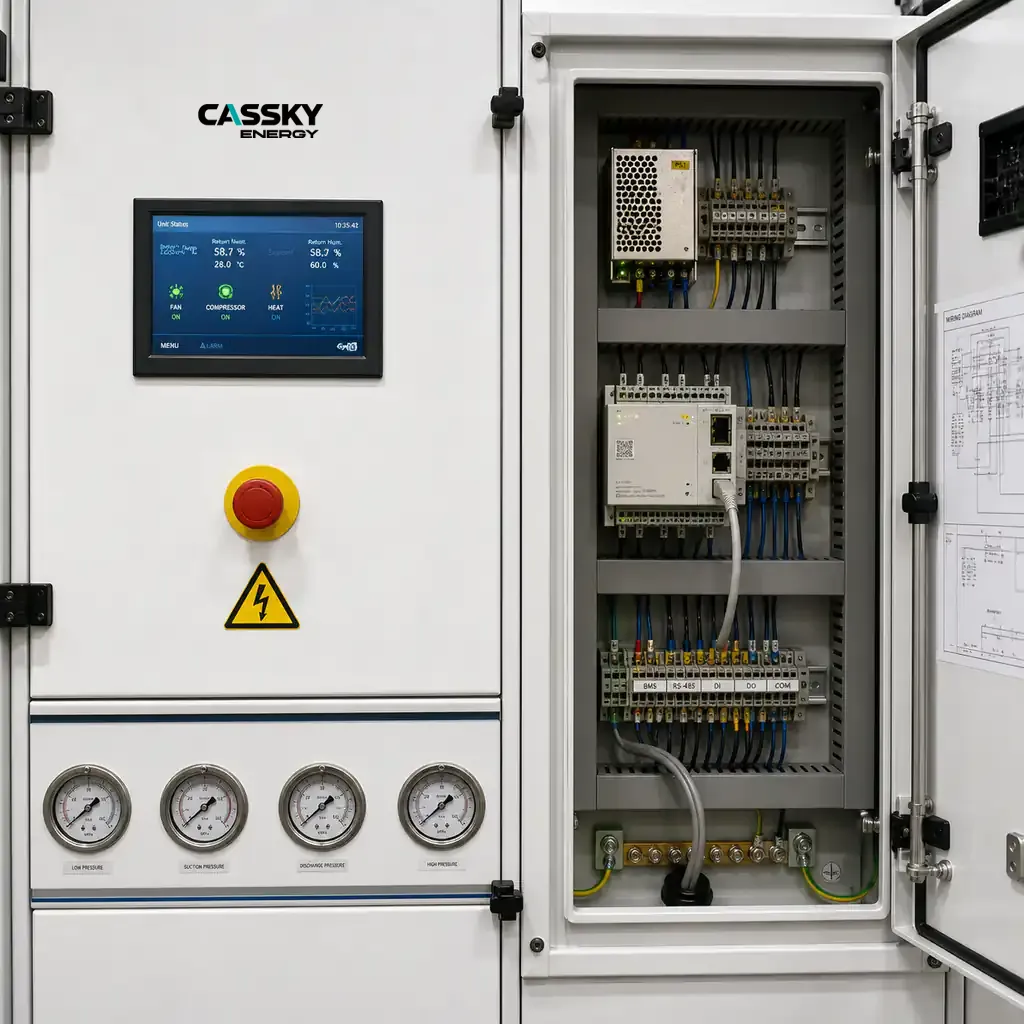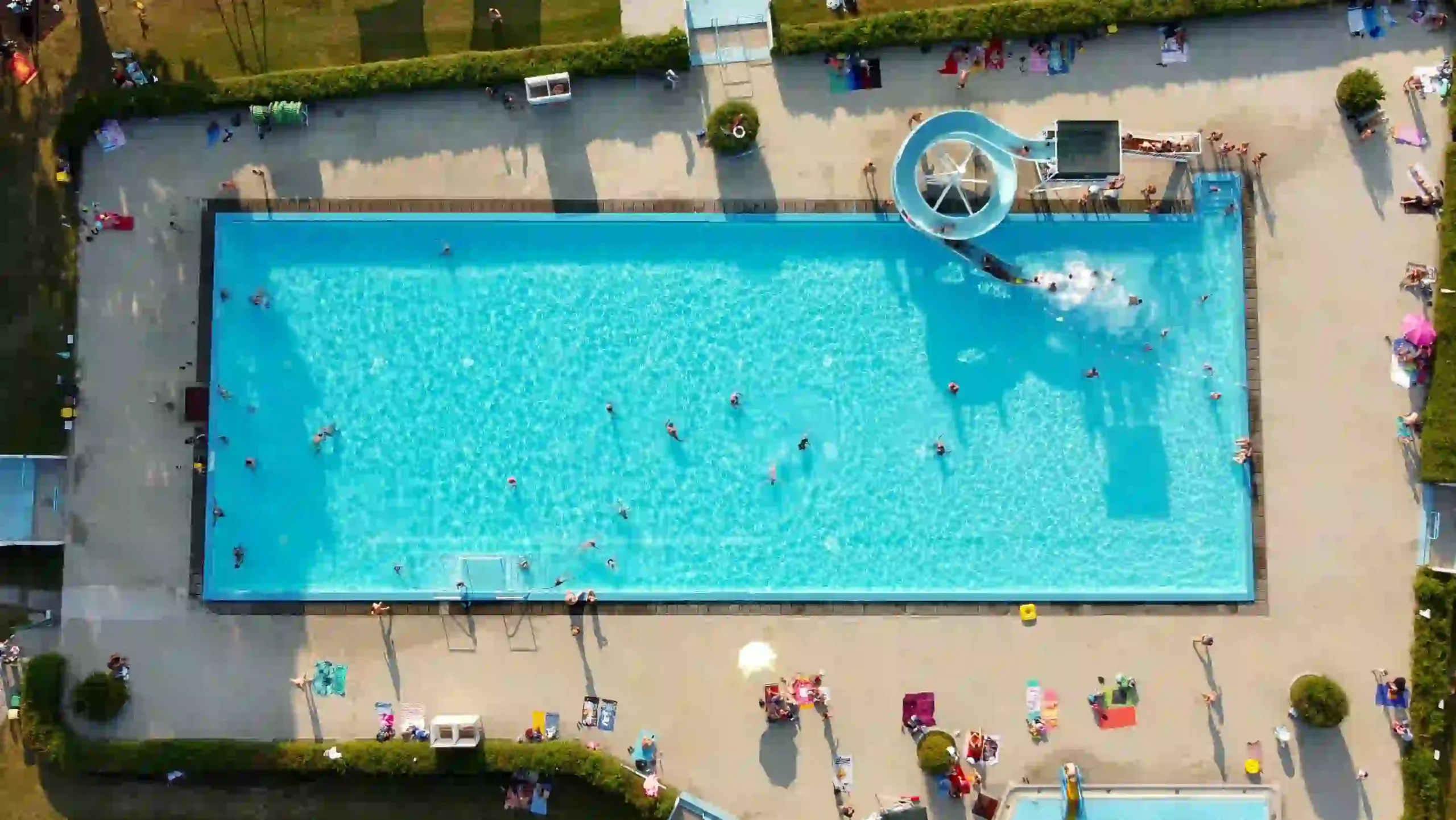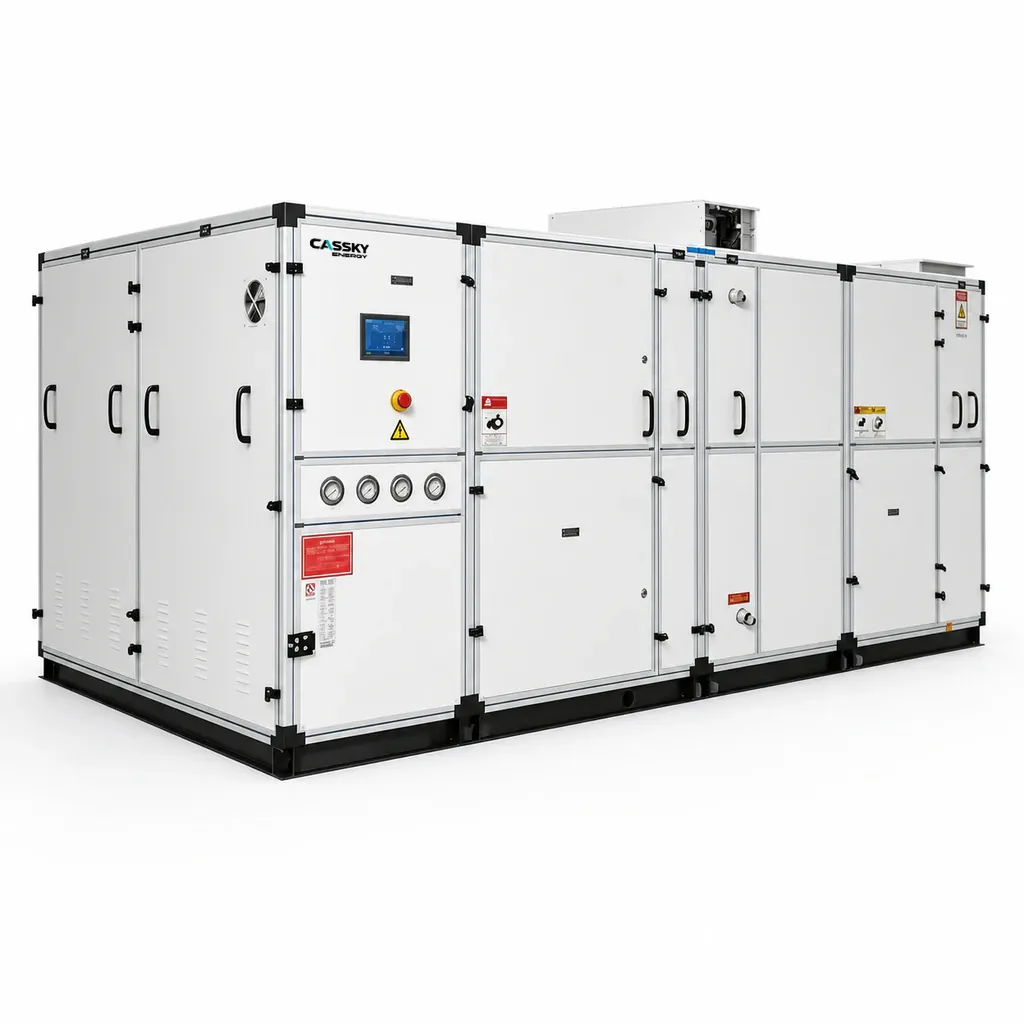

Integrates pool-room dehumidification, air cooling and heating, pool-water heating, ventilation coordination and heat recovery in one controlled system. Designed for indoor pool projects where humidity, room temperature, water temperature and air balance must work together.
Fresh-air volume, exhaust strategy, pool-room pressure and duct external static pressure must be confirmed through project-specific mechanical design, control logic and commissioning.
Show the physical equipment before the model table. Three equally sized images help buyers assess construction, maintenance access and control capability.
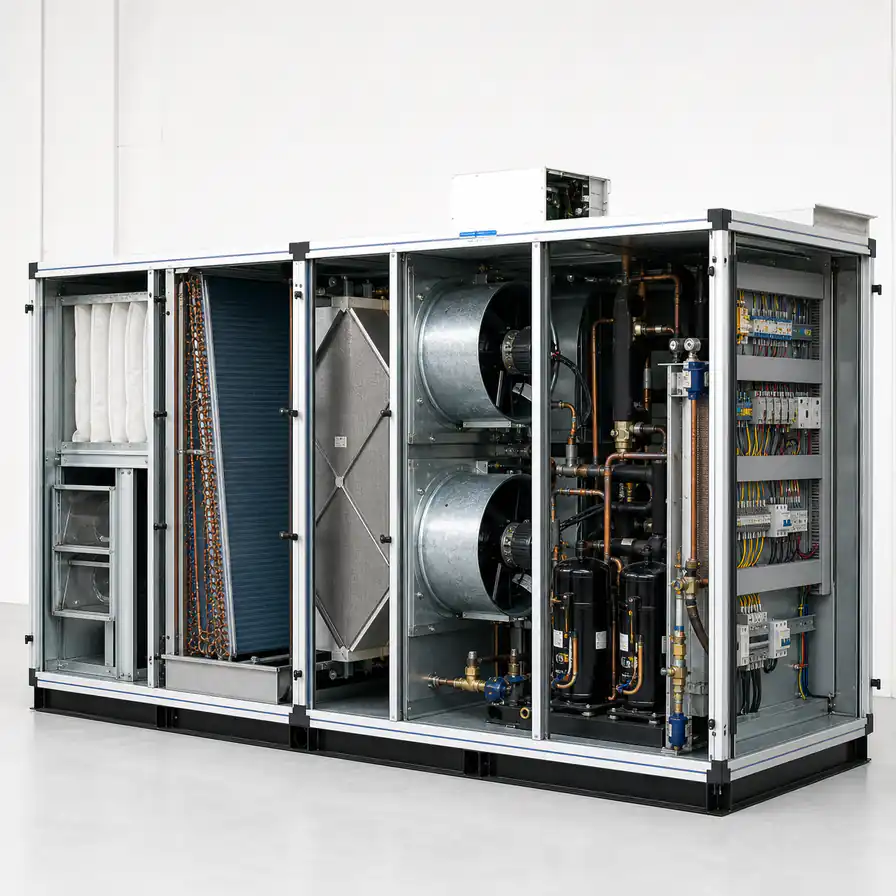
The controller coordinates humidity, room temperature, pool-water demand, ventilation and recovered-energy routing according to the active operating mode and configured priorities.
Removes latent moisture from return air to support the target pool-room relative humidity.
Responds to the room's sensible cooling or heating load across seasonal conditions.
Directs available heating capacity to the pool-water circuit when required by the control mode.
Sensors, load priorities, fans, refrigeration circuit, dampers and project control interfaces
Coordinates the designed outdoor-air and exhaust-air paths according to the project ventilation strategy.
Reuses available energy from dehumidification and exhaust processes for supply-air treatment or pool-water heating, subject to the selected configuration, operating mode and simultaneous loads.
Five functions do not mean five simultaneous full-capacity outputs. Outdoor-air volume, exhaust balance, pool-room pressure, duct static pressure, BMS points and operating priorities must be defined and commissioned for each project.
A commercial indoor pool requires controlled recirculation, supply-air distribution, outdoor air and exhaust—not only moisture removal. Each path must support humidity control, glazing protection, occupant comfort and the designed pressure relationship.
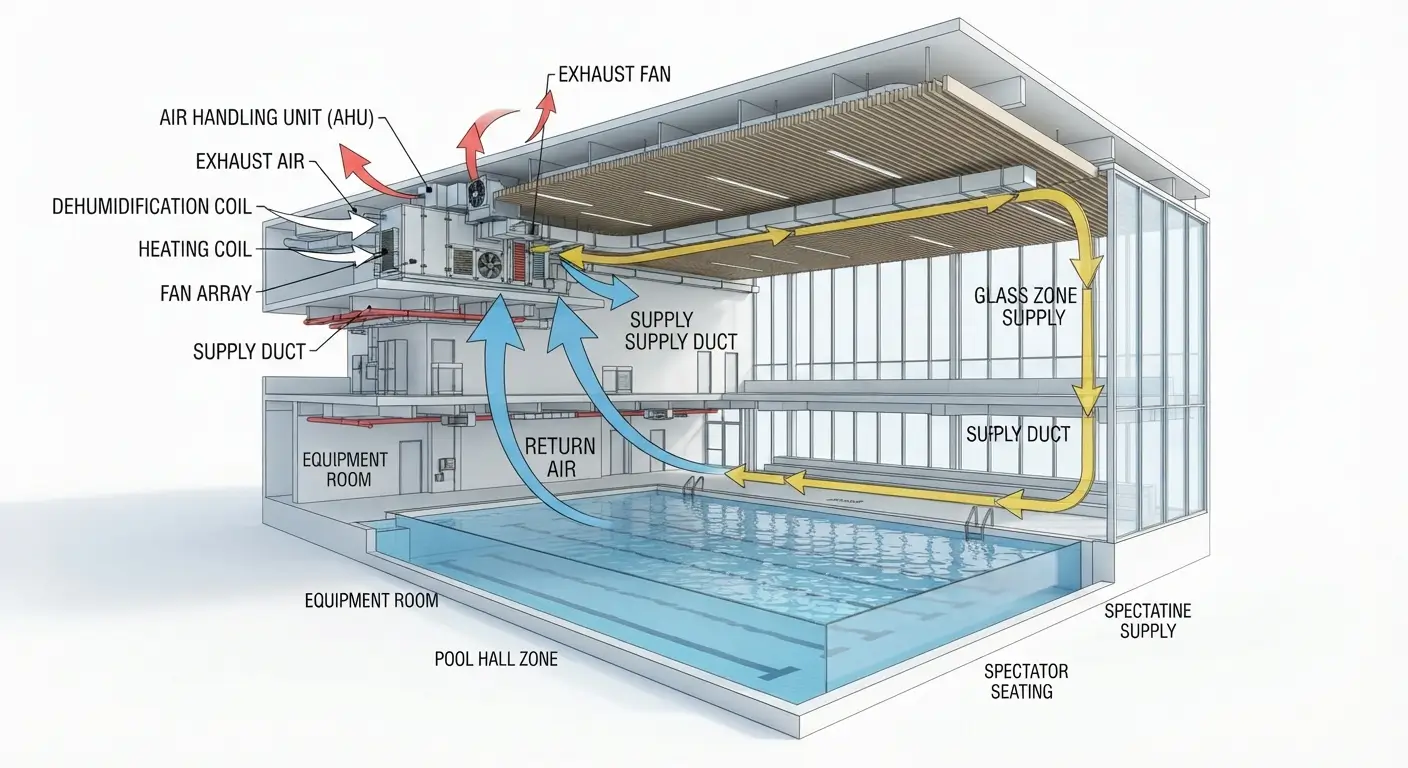
Capacity, airflow, heat routing and control sequences are interdependent. Complete project inputs reduce model reselection and late changes to ductwork, controls or plant-room layout.
Pool load · room load · outdoor air · exhaust strategy · duct static pressure · air/water priorities · BMS points
Send Project Drawings →Use these series ranges for initial screening. Final selection must match the calculated latent and sensible loads, required airflow, outdoor-air ratio and duct external static pressure at the project's design conditions.
Technical note: these values describe the series range. Individual model performance varies with entering-air conditions, pool-water temperature, outdoor-air ratio, airflow, external static pressure and operating mode. Refer to the model table for rated conditions, fan curves, electrical data, sound data, refrigerant and certification scope.
Resolve the main system questions before tender comparison or final equipment selection.
Discuss Your Pool Project →Cassky specializes in high-performance heat pump systems and solar energy solutions, providing reliable products and customized services for global distributors, engineering companies, contractors, and brand partners.
Tell us about your product or project requirements. Our team will contact you to discuss the next step.