Solar Energy Absorption
The selective coating inside each evacuated tube absorbs sunlight and converts it into thermal energy.

Home / Evacuated-Tube Solar Water Heater / Evacuated-Tube Solar collector Water Heater
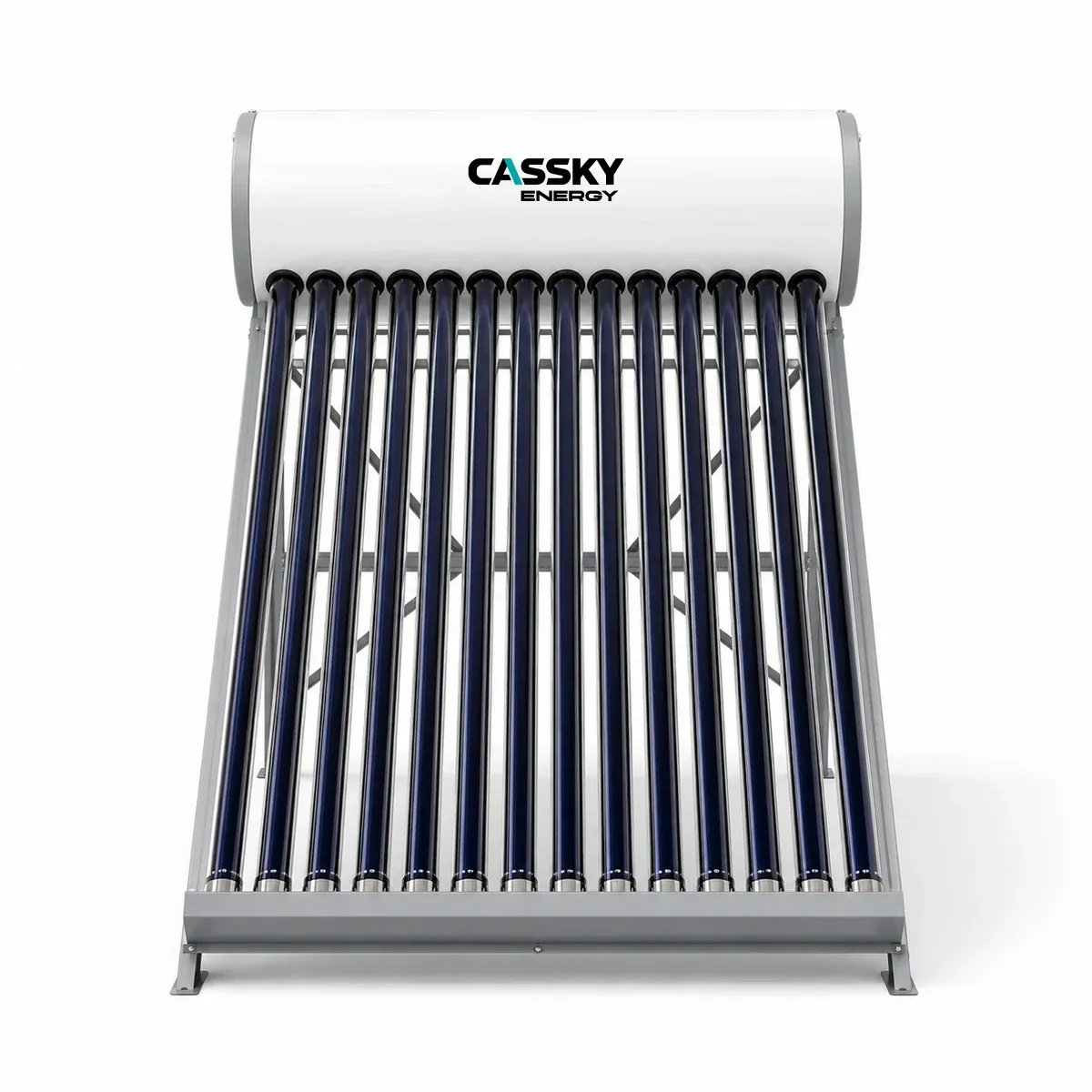
Configurable integrated and pressurized systems
A vacuum-tube solar hot-water platform configurable for different tank capacities, climates, installation requirements and target markets. Cassky supports private labeling, component selection and flexible production scheduling for distributors, project buyers and growing brands.
*Preliminary market-reference ranges compiled from comparable manufacturer and supplier specifications. Final Cassky values must be confirmed against the selected construction, pressure type and approved technical sheet before publication.
Each double-wall glass tube captures solar radiation while its vacuum layer limits heat loss. Collected heat is transferred to the storage system, producing hot water with little or no conventional energy during suitable solar conditions.
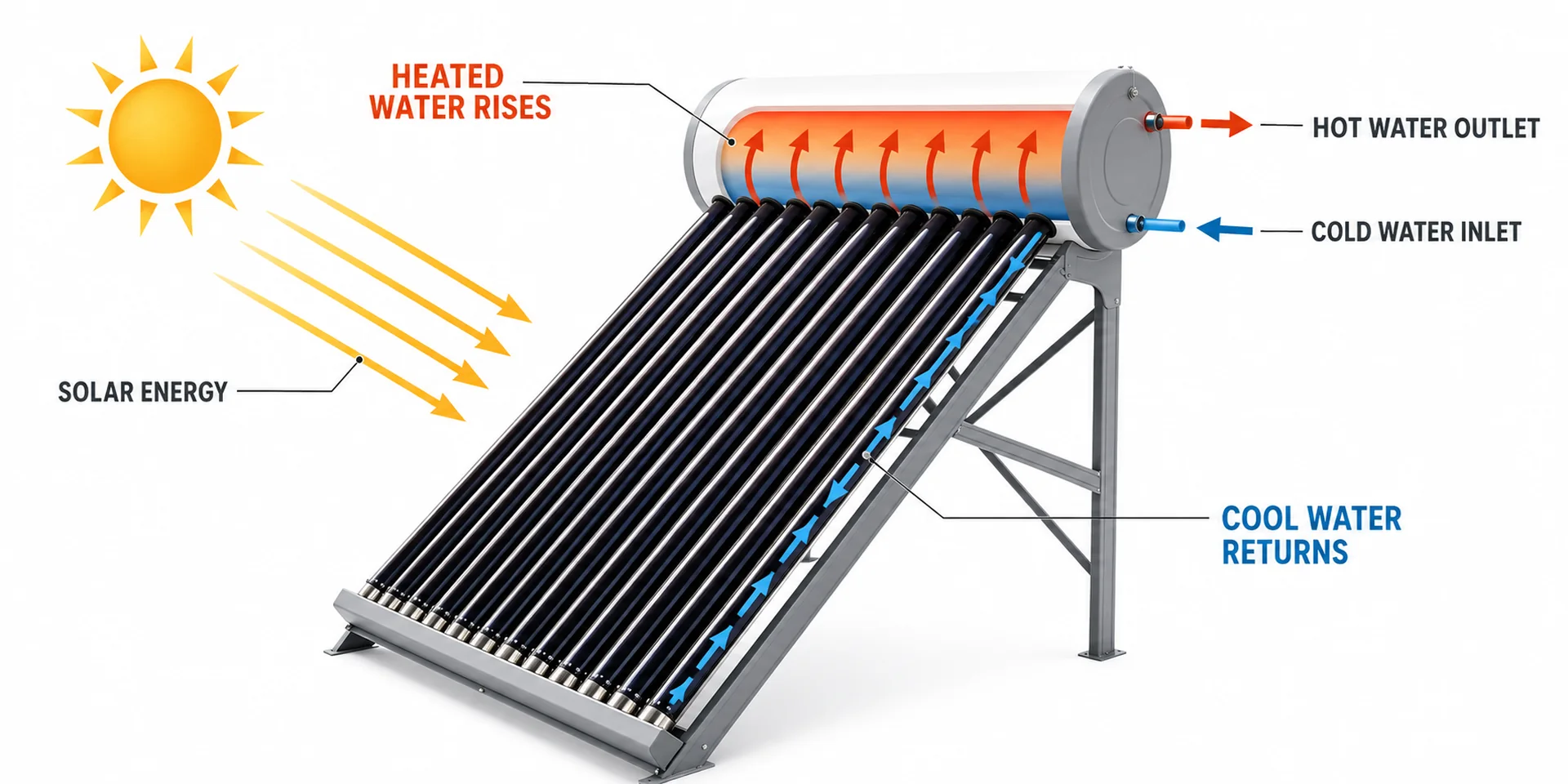
The selective coating inside each evacuated tube absorbs sunlight and converts it into thermal energy.
The vacuum between the glass layers reduces conduction and convection losses, supporting heat collection in cooler conditions.
Depending on the selected system, heat is transferred through direct thermosiphon circulation, a heat pipe or an indirect coil.
A polyurethane-insulated tank stores the heated water for domestic, hospitality or light-commercial use.
Pressure conditions, climate, installation habits and local price positioning determine the right configuration. Cassky can develop a matched product family instead of forcing every market into one standard model.
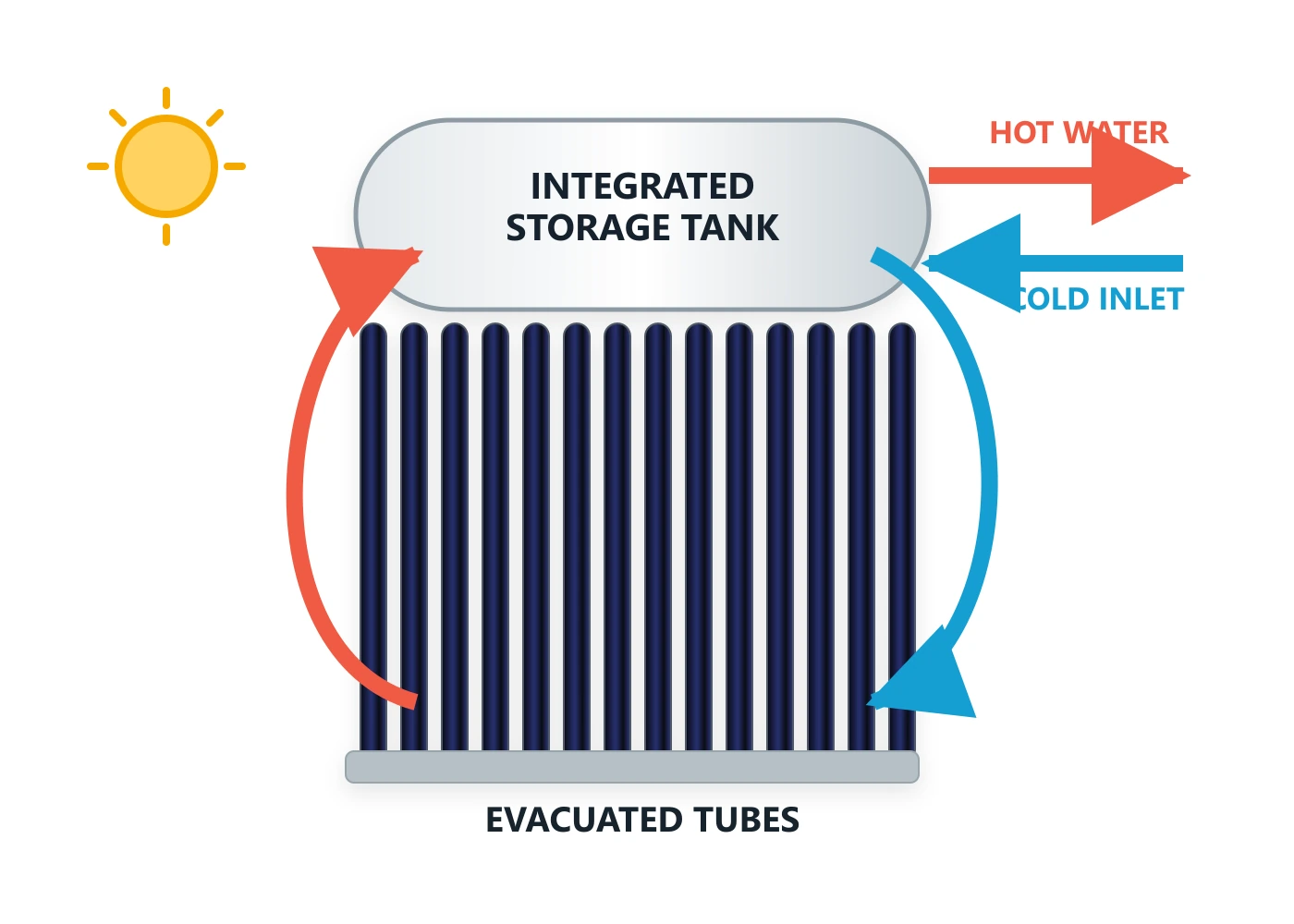
A simple rooftop configuration in which water circulates naturally between the evacuated tubes and storage tank.
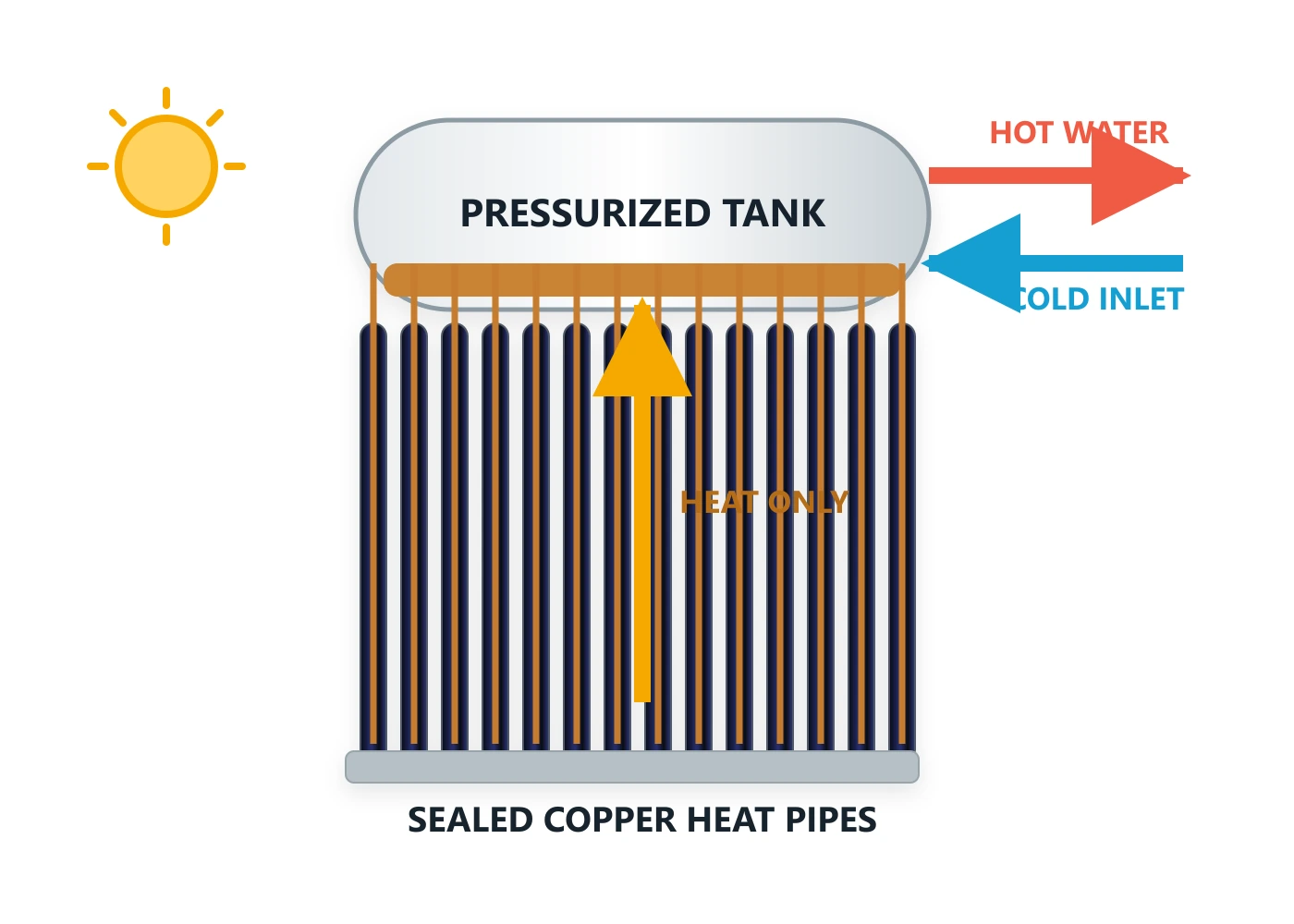
Heat pipes transfer solar energy to a pressurized tank circuit without allowing domestic water to flow through the glass tubes.
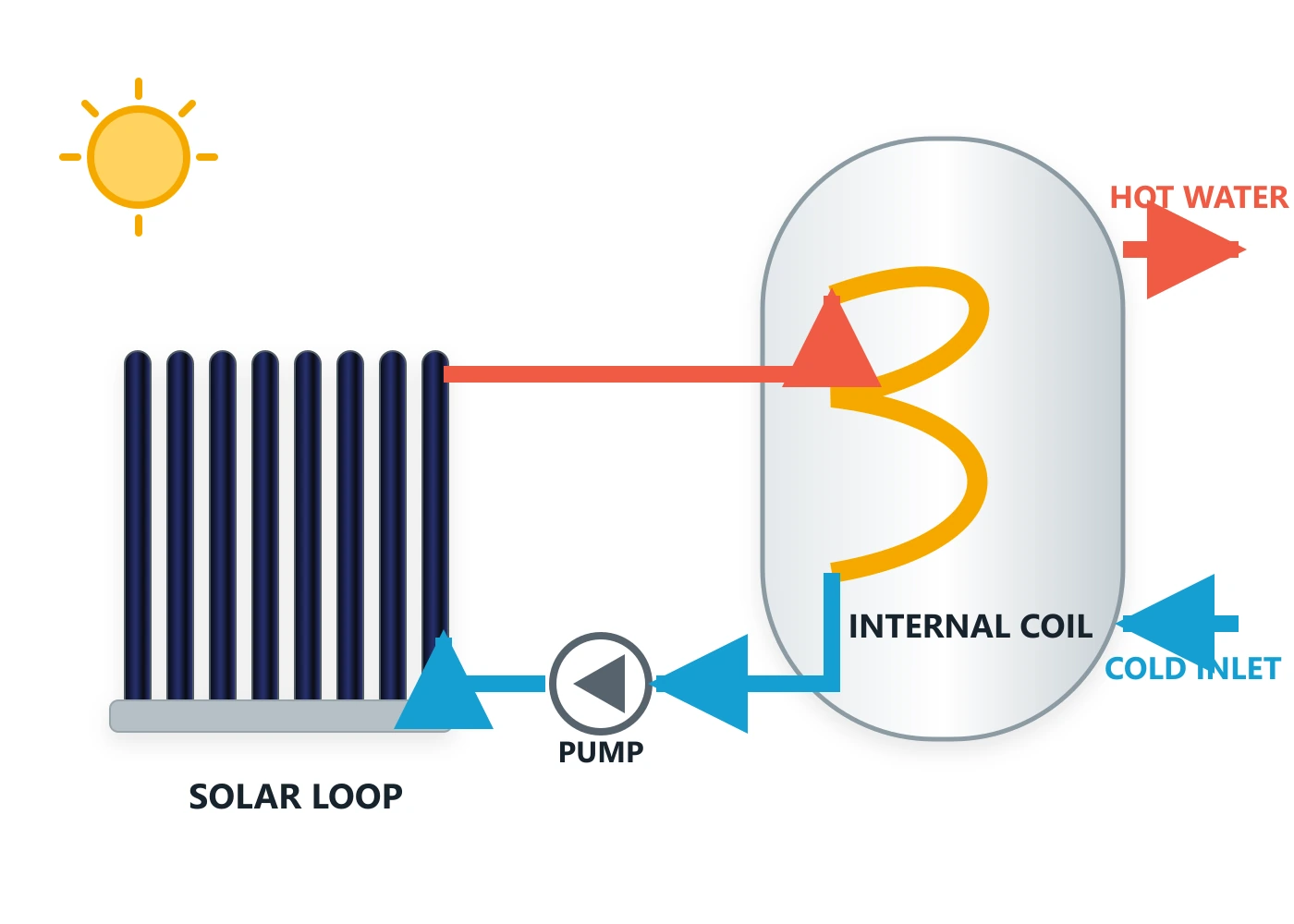
An internal coil or separated circuit can be configured for mains-pressure preheating and selected cold-climate requirements.
The value of an evacuated-tube system comes from more than solar absorption. Product architecture, packaging, serviceability and configuration consistency all influence distributor success.
The evacuated space around the absorber helps limit heat loss compared with an uninsulated exposed absorber.
More useful heat under variable conditions.Tube quantity can be matched to tank capacity, expected demand and the intended market position.
A scalable product family from one platform.Passive thermosiphon versions require little operating electricity, while controllers and backup heaters remain optional.
A clear energy-saving sales proposition.High-density polyurethane insulation helps retain collected heat between solar collection and hot-water use.
Improved hot-water availability.Vacuum tubes, controllers, sensors and selected accessories can be supplied as service parts according to the configuration.
Easier distributor after-sales support.Tank material, casing finish, frame, pressure type and packaging can be aligned with local expectations.
Better product-market fit.| Item | Common Range / Option | Configuration Notes |
|---|---|---|
| Nominal Tank Capacity | 100 / 150 / 180 / 200 / 240 / 250 / 300 L | Final usable volume and model sequence require confirmation. |
| Evacuated Tube Quantity | 10–30 tubes | Matched to tank capacity, architecture and target performance. |
| Common Tube Size | Ø58 × 1800 mm | Alternative tube formats may be evaluated for volume orders. |
| System Type | Non-pressure / pressurized / indirect | Select according to water pressure, climate and installation practice. |
| Inner Tank | SUS304 or market-specific option | Material grade and thickness must be stated in the quotation. |
| Outer Casing | Stainless steel / coated steel | Finish, color and corrosion requirements are configurable. |
| Thermal Insulation | Approx. 50 mm PU foam | Final density and thickness depend on the selected tank design. |
| Frame | Galvanized or coated steel | Roof angle, wind load and corrosion environment require review. |
| Working Pressure | Configuration-dependent | Non-pressure and pressurized products must not share one pressure rating. |
| Electric Backup | Optional | Power, voltage, plug and thermostat depend on destination market. |
| Controller & Sensors | Optional | Display, functions and language can be selected by model. |
| Heat Exchanger | Optional internal coil | Coil material and surface area require project confirmation. |
| Branding | OEM / private label | Logo, label, packaging and documentation subject to order terms. |
The final product should be selected from actual daily hot-water demand, local solar conditions, available roof area, water pressure and backup-heating strategy—not capacity alone.

Domestic bathing and general hot-water supply with capacity matched to occupancy.

Multiple-unit or preheating arrangements for hospitality hot-water demand.

Distributed hot-water production for accommodation and staff facilities.

A capacity series configured for local installation practices and price segments.
Providing complete project and market inputs helps reduce configuration changes after quotation and makes the recommended system more commercially realistic.
Common questions from distributors, private-label buyers and project purchasers evaluating evacuated-tube solar water heaters.
Comparable market products commonly cover 100–300 L, with intermediate sizes such as 150, 180, 200, 240 and 250 L. Cassky availability must be confirmed by system type, tank construction and order quantity.
Tube quantity is normally matched to tank capacity and expected solar input. Common comparable configurations use approximately 10–30 tubes, but final selection must consider climate, demand and tube specification.
They can be developed as separate product configurations. The hydraulic architecture, tank construction, safety devices and ratings must be confirmed independently for each version.
Options may include capacity, tube quantity, tank and casing material, color, frame, controller, electric backup, heat exchanger, logo, rating label, manual and packaging. Availability depends on technical feasibility and order terms.
A pilot-order arrangement can be discussed for suitable standard or lightly customized products. MOQ and pricing depend on materials, tooling, branding and packaging requirements.
Buyers can provide a rolling forecast and discuss pilot production, confirmed batch releases, phased shipments or seasonal capacity planning. Every schedule remains subject to purchase-order confirmation and current production capacity.
Cold-climate suitability depends on system architecture, heat-transfer fluid, pipe routing, controls and freeze-protection design. A project-specific review is necessary; vacuum tubes alone do not make the complete installation freeze-proof.
Please provide destination country, required capacity, estimated quantity, pressure type, preferred materials, electrical standard, branding needs, packaging requirements and delivery schedule.
Cassky specializes in high-performance heat pump systems and solar energy solutions, providing reliable products and customized services for global distributors, engineering companies, contractors, and brand partners.
Tell us about your product or project requirements. Our team will contact you to discuss the next step.