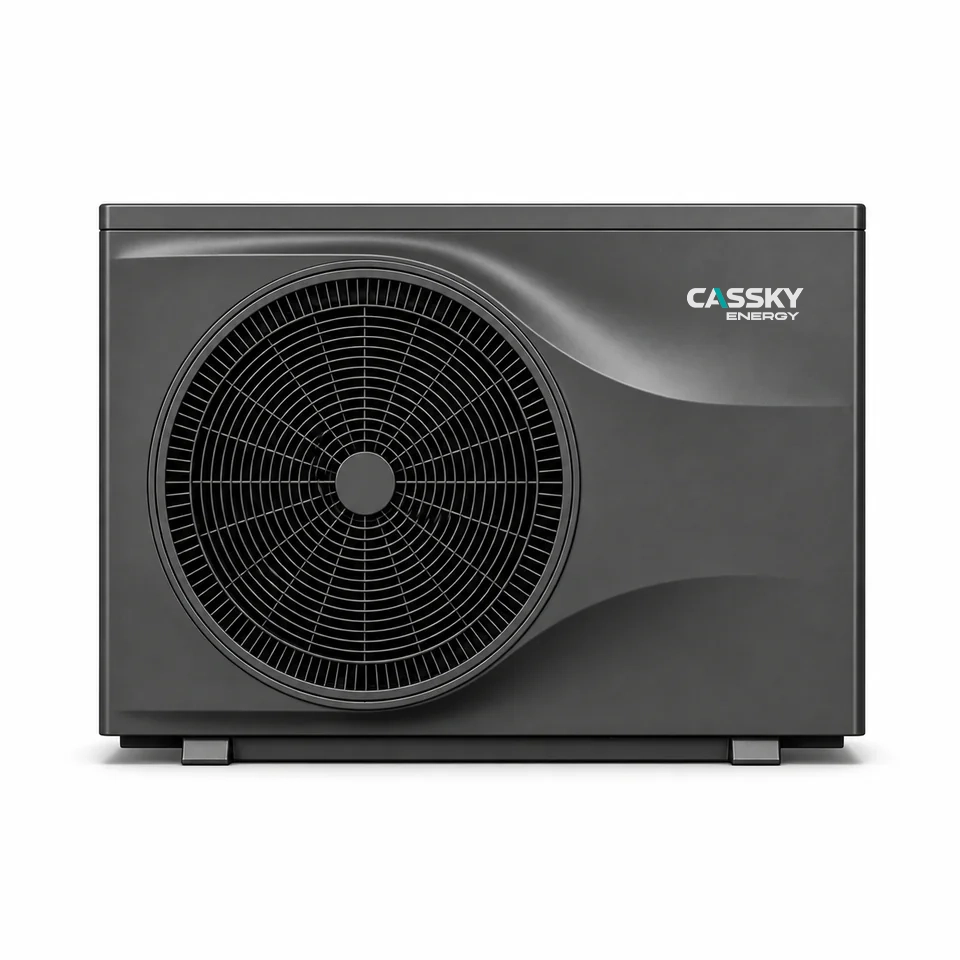
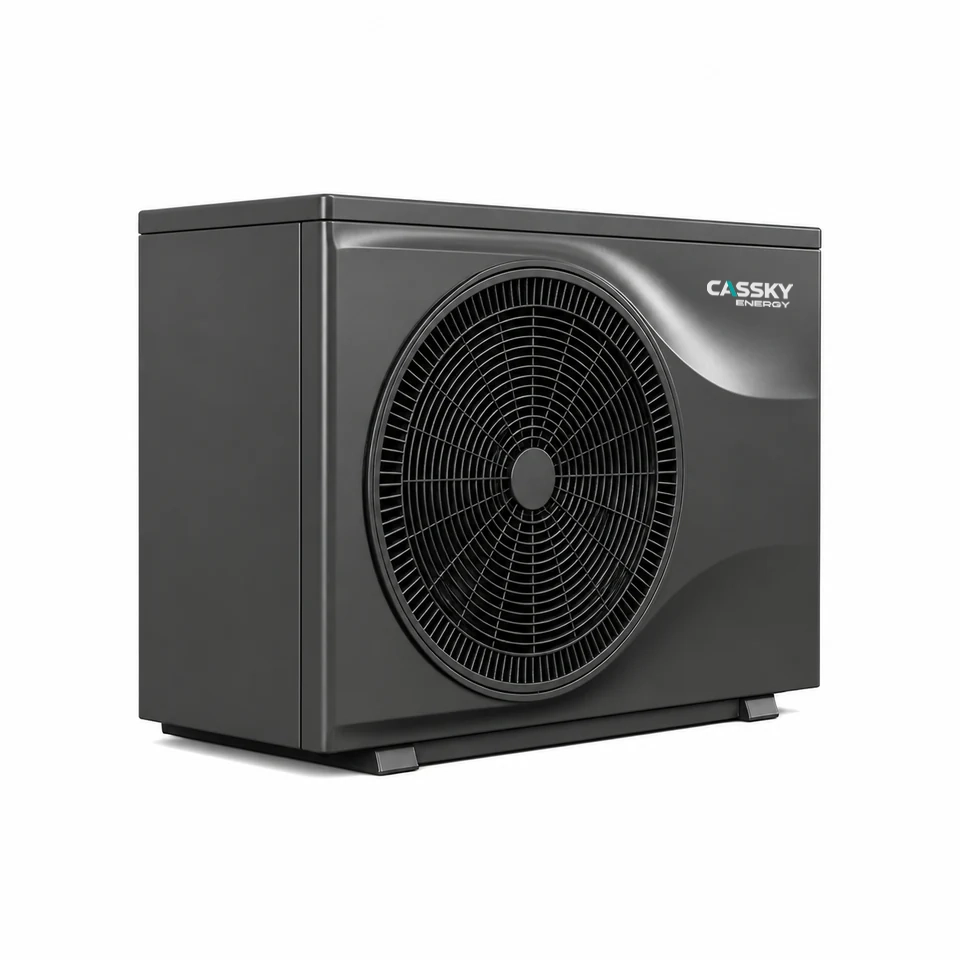
Capture Ambient Heat
The evaporator absorbs available heat from outdoor air into the refrigerant circuit.

Designed for private, hotel and commercial pools, the full DC inverter system adjusts compressor and fan speed to actual heat demand—providing powerful initial heating, stable temperature maintenance, optional cooling and quieter part-load operation.
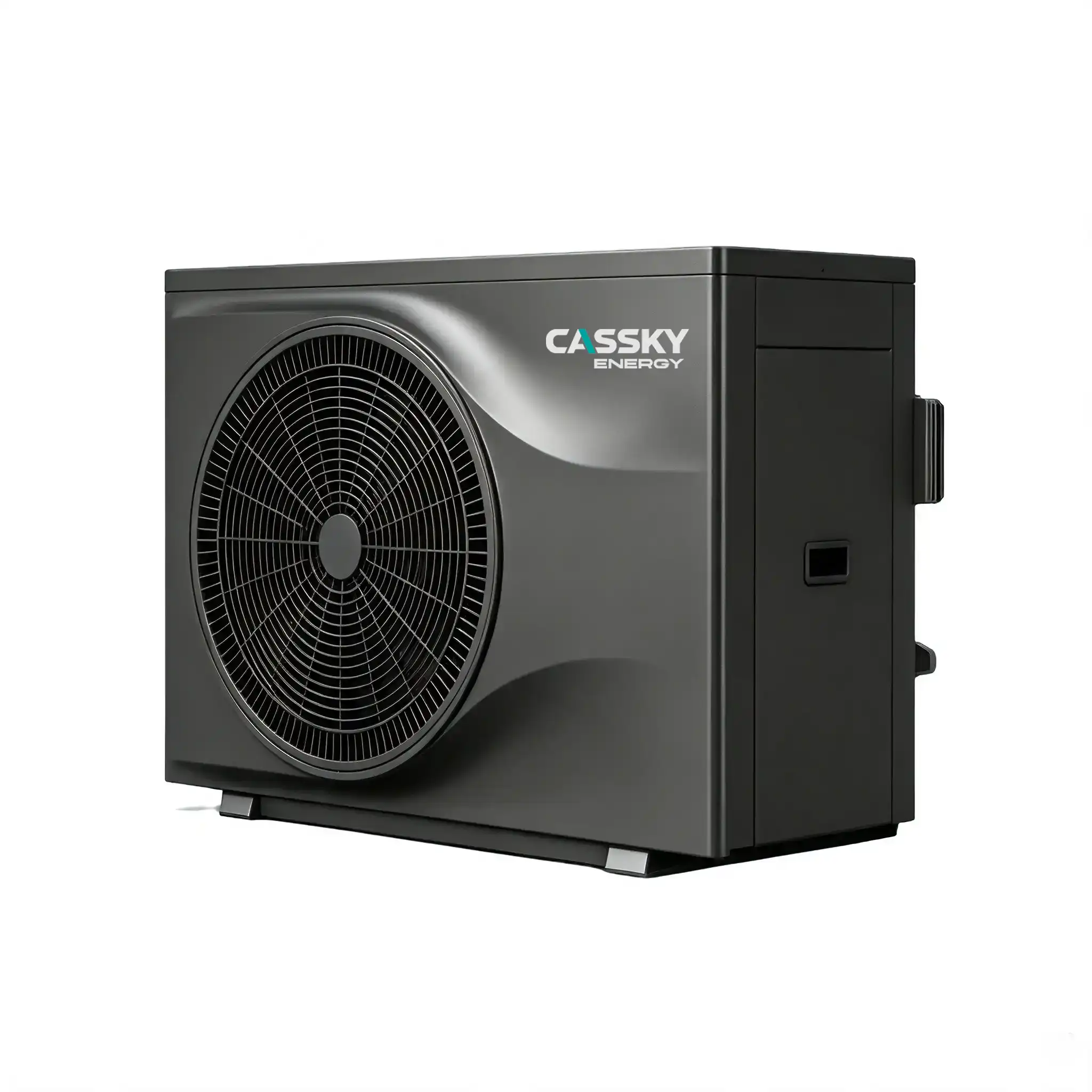
Instead of converting electricity directly into heat, the system transfers available energy from outdoor air to the filtered pool-water circuit. Full DC inverter control adjusts compressor and fan speed as operating conditions and heat demand change.
The evaporator absorbs available heat from outdoor air into the refrigerant circuit.
The inverter compressor increases refrigerant pressure and temperature for useful heat transfer.
The titanium heat exchanger transfers energy to the circulating pool water after filtration.
Compressor and fan speed reduce as the water approaches its target, limiting unnecessary cycling.
Pool volume, surface area, starting and target water temperatures, ambient conditions, wind exposure, pool-cover use and the required heat-up time all affect capacity selection. A pool cover can substantially reduce evaporation and ongoing heat loss.
Full DC inverter control varies compressor and fan speed instead of relying on repeated full-output starts and stops. The unit can deliver higher output during initial heating, then modulate as the pool water approaches its target temperature.
The bars illustrate the control sequence rather than fixed operating percentages. Actual modulation range, heating capacity and energy use vary by model and operating conditions. Capacity should be checked at the lowest intended ambient temperature.
The water circuit, protection devices and chemical dosing layout matter as much as the refrigeration system.
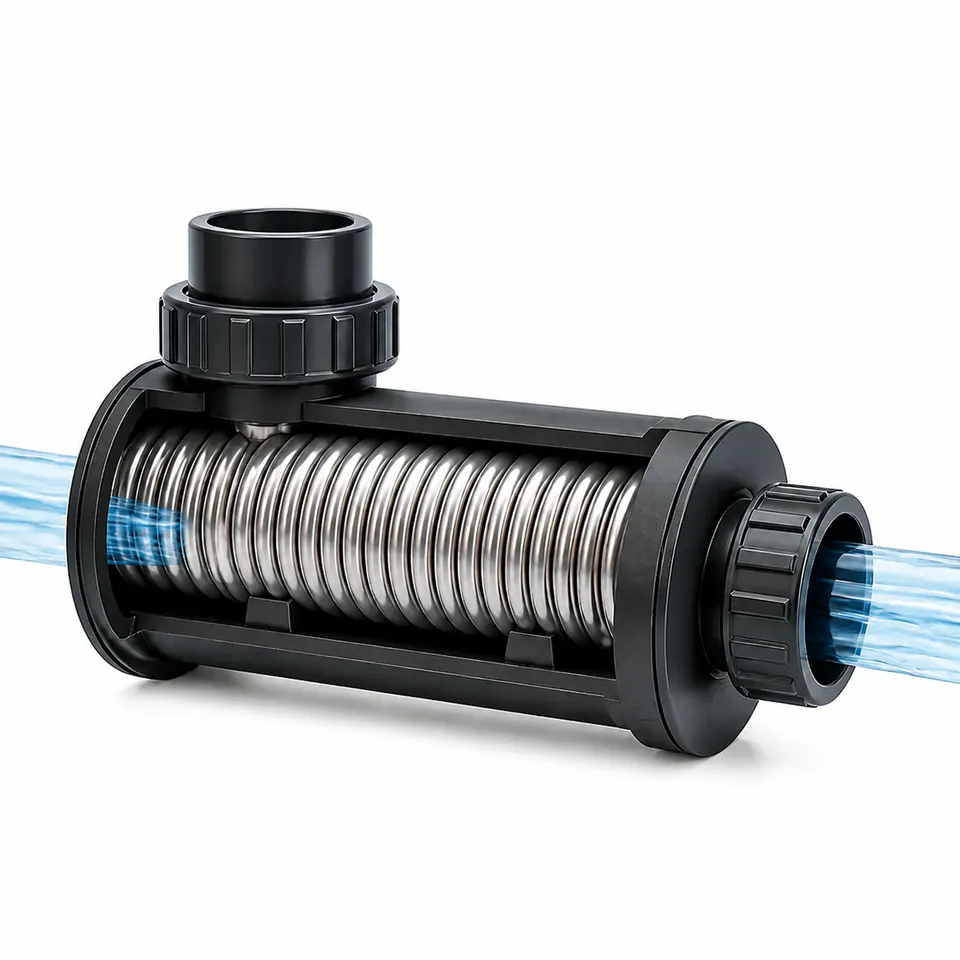
Designed for pool-water service; verify the published water-chemistry range for freshwater and salt-chlorinated projects.
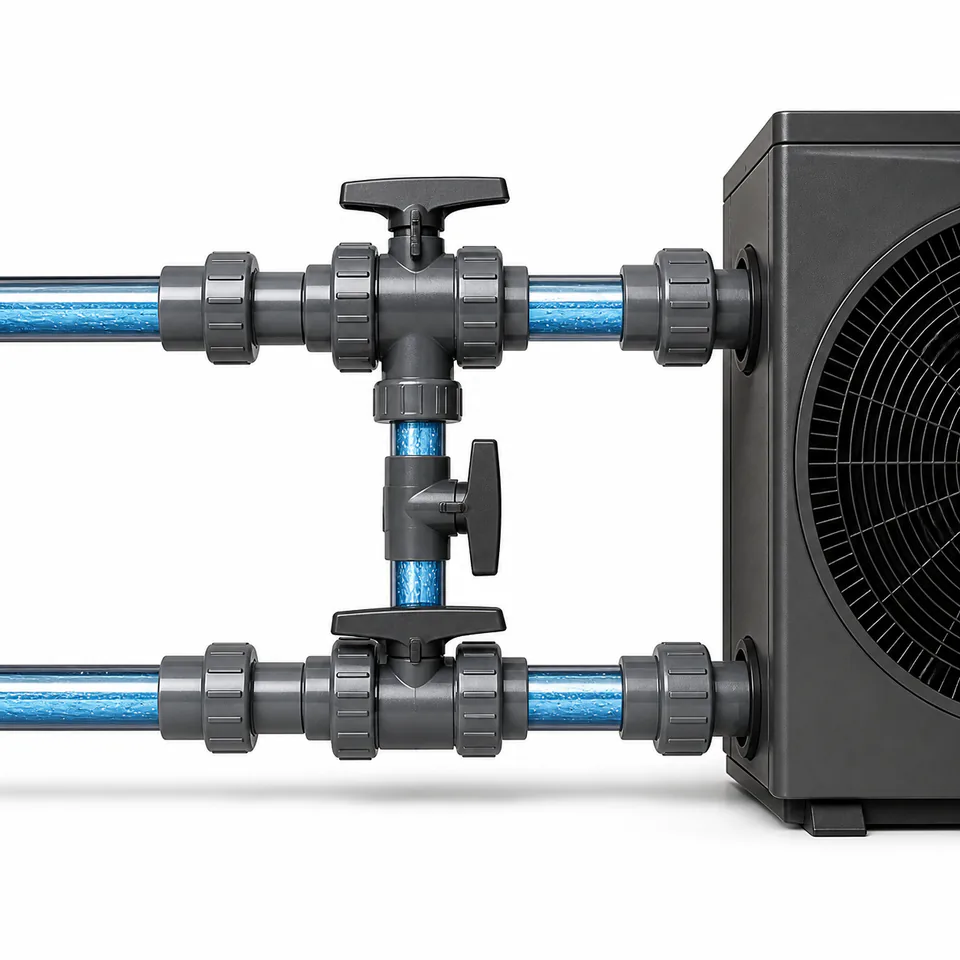
Maintain model-specific flow and install a suitable bypass for commissioning and service.
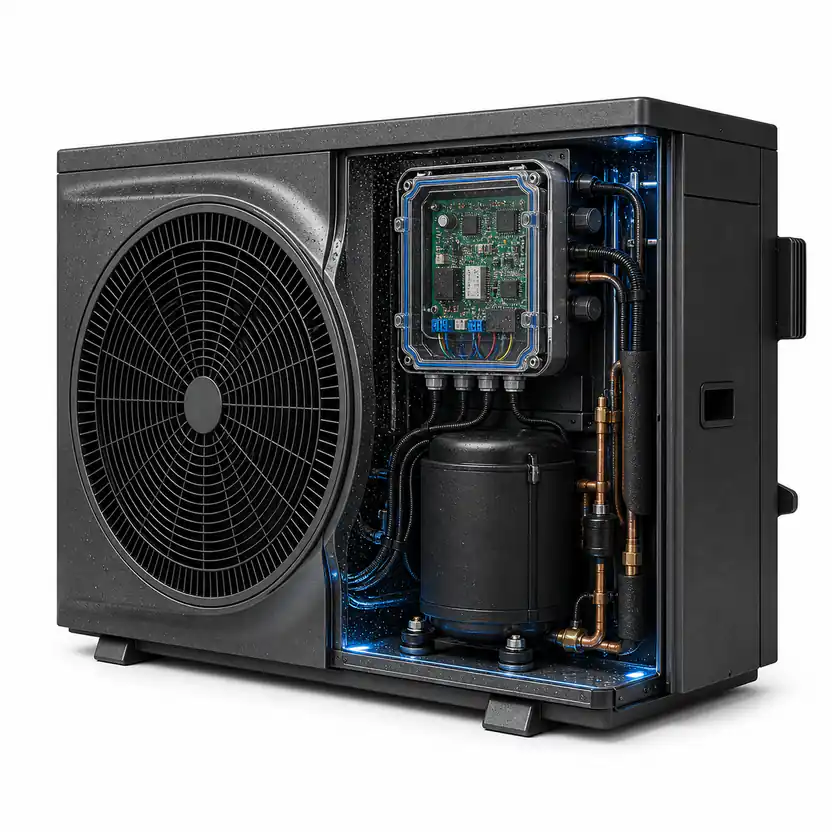
Compressor, DC fan, electrical enclosure, flow protection.
Place chemical dosing downstream of the heater and follow local pool-treatment guidance. Incorrect pH, disinfectant concentration or flow can shorten component life.
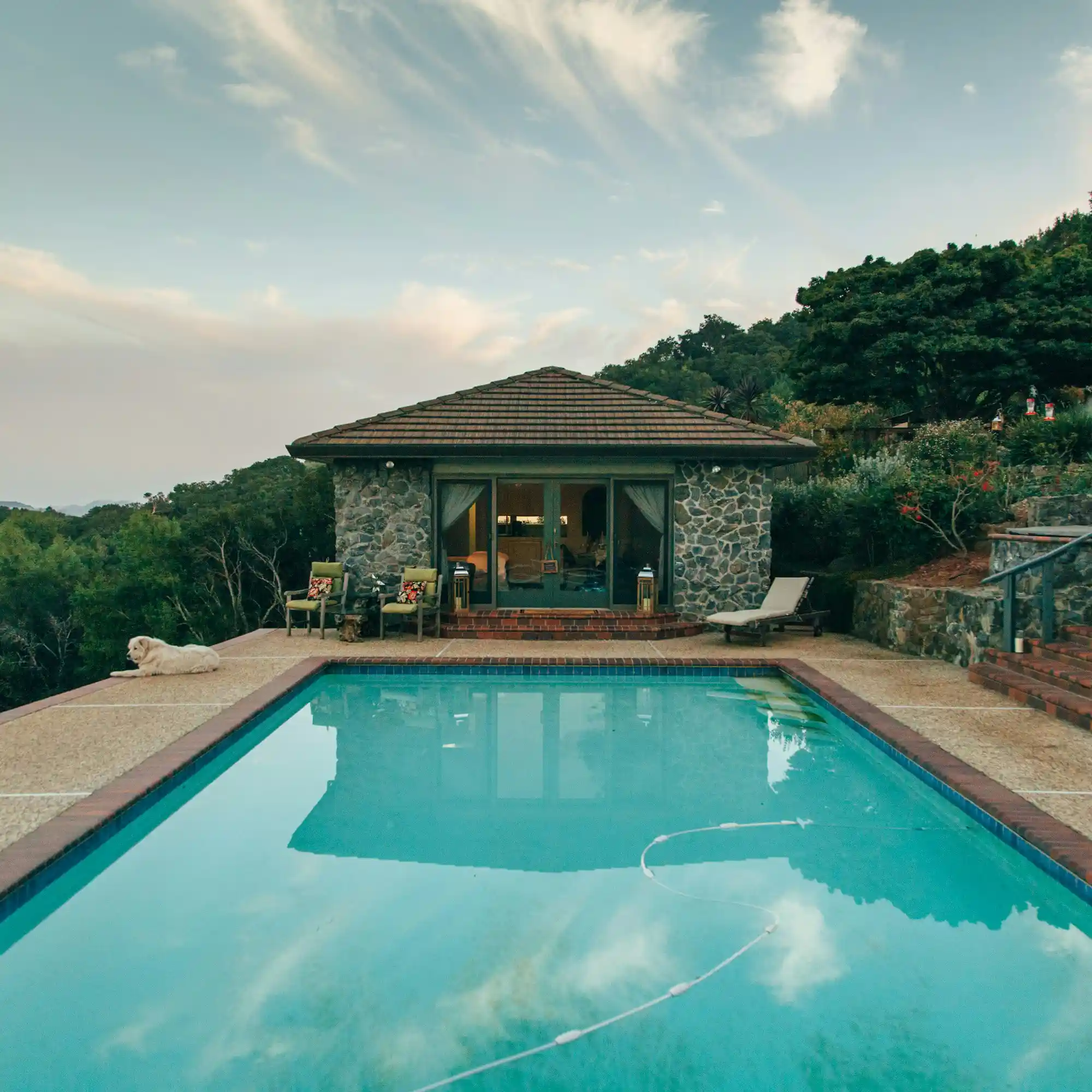
Season extension, low-load maintenance and remote scheduling.

Guest comfort and low perceived noise.
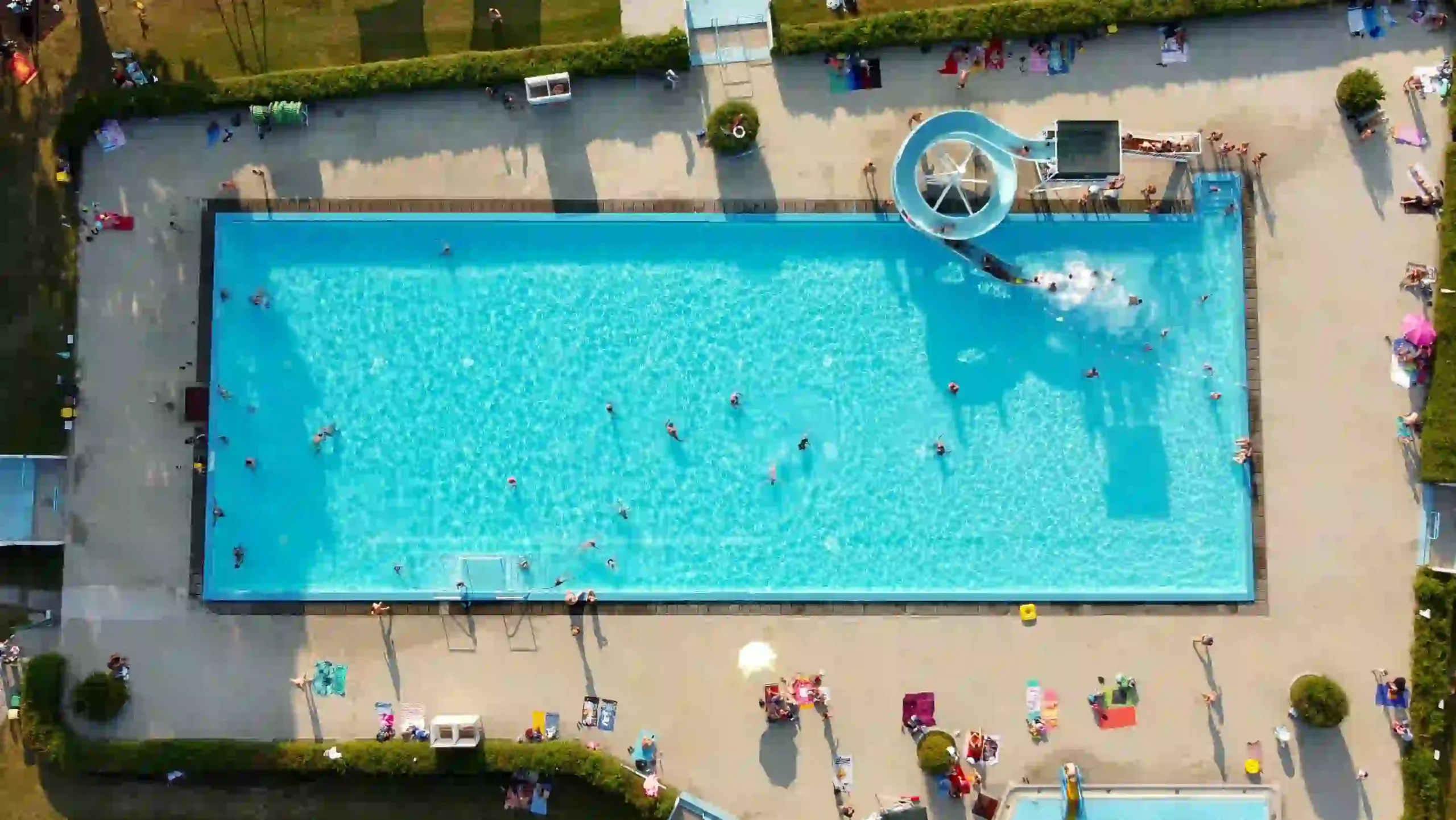
Long operating hours, larger loads and redundancy.
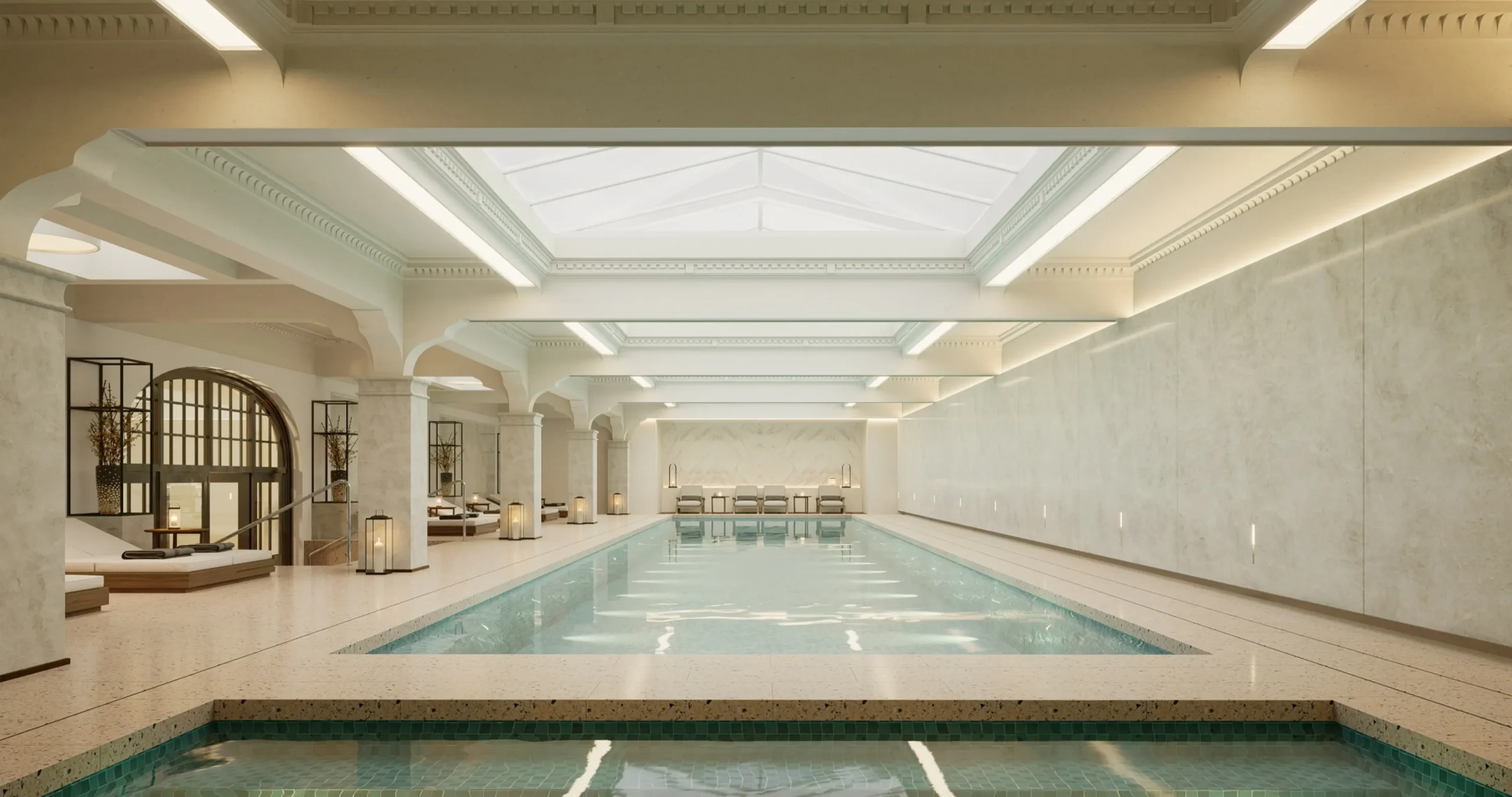
Coordinate pool heating with separate hall ventilation and dehumidification.
Pool volume is only the starting point. A reliable recommendation must also account for climate, water-temperature targets, heat-up time and ongoing heat loss under actual operating conditions.
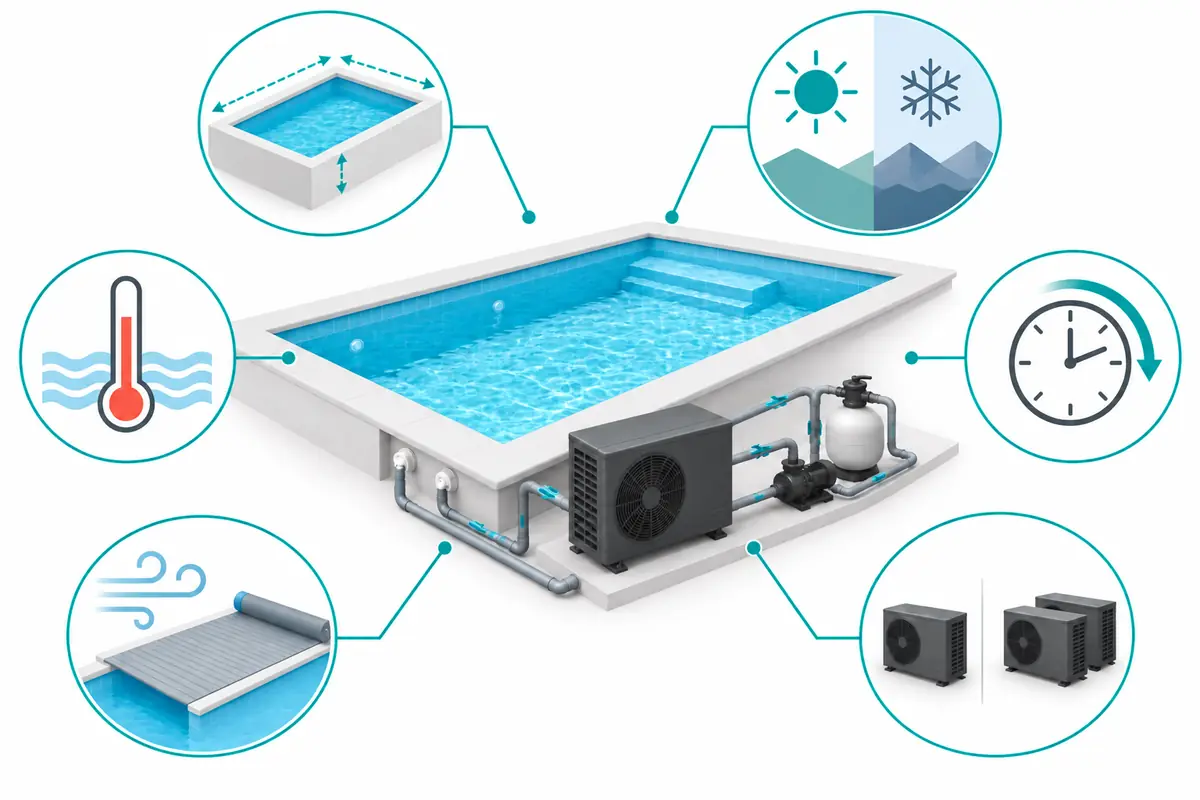
Provide surface area, average depth and total effective water volume.
Identify indoor or outdoor use, location, design ambient temperature and wind exposure.
State the starting water temperature, target setpoint and intended operating season.
Define when the pool must be ready so initial heating capacity can be calculated.
Include cover use, daily schedule, occupancy and conditions that increase evaporation.
Match actual output at the design condition, then determine single-unit, multi-unit or standby requirements.
Selection should be checked against the unit's heating capacity at the lowest intended ambient temperature, not headline nominal capacity alone. For indoor pools, coordinate pool-water heating with the separate ventilation and dehumidification design.
Use the series ranges below for initial screening. Final model selection should be based on the calculated pool heat load and the unit's rated output at the project's design air and water conditions.
OEM support: Custom logo, cabinet colour, controller interface, packaging and documentation are available according to model, market and order quantity.
Specifications shown are series ranges. Individual model performance, available functions and test conditions are listed in the model table.
Use pool volume, location, indoor/outdoor condition, season, setpoint, warm-up time, wind exposure and pool-cover use. Then verify output at the lowest intended ambient condition.
Heat-up time depends on water volume, temperature rise, unit capacity and simultaneous heat loss. Provide the starting temperature and required completion time for calculation.
Applicable reversible models can heat or cool. Confirm the selected model’s water-temperature range and capacity in each mode.
Titanium is widely used for treated and salt-chlorinated pools, but the project must remain within the manufacturer’s published pH, disinfectant, salinity and flow limits.
Send target market, capacity range, refrigerant, voltage, certifications, cabinet and controller requirements, branding files and quantity.
Cassky specializes in high-performance heat pump systems and solar energy solutions, providing reliable products and customized services for global distributors, engineering companies, contractors, and brand partners.
Tell us about your product or project requirements. Our team will contact you to discuss the next step.