Low-Iron Tempered Glass
High-transmission glazing admits solar radiation while protecting the absorber from weather and impact.

Solar Thermal Product Range
Build reliable solar hot-water solutions with standalone thermal collectors or complete pressurized systems configured for your market and project.
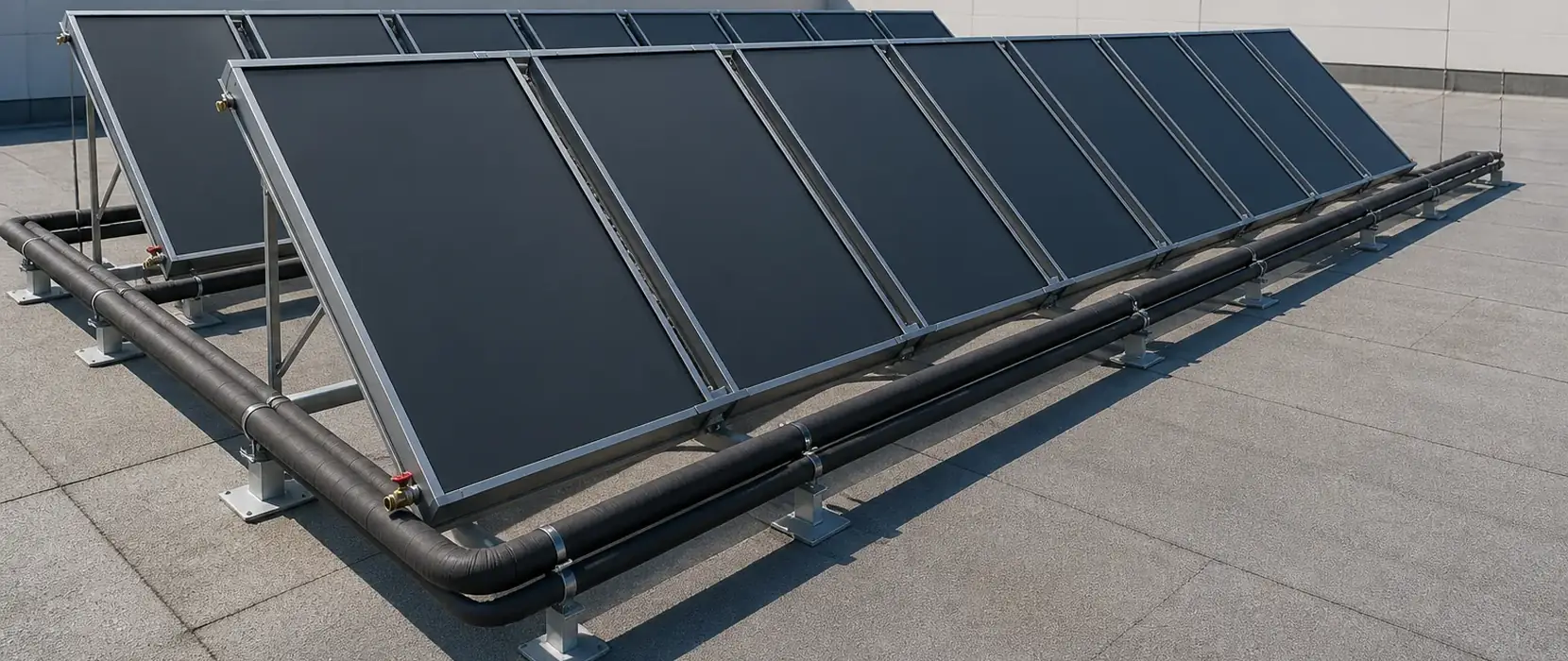
Choose a configurable collector for system integration or a pressurized package that combines collection, storage and roof-mounting components.

Integrates with custom storage, pumping and control designs for domestic hot water, commercial preheating and solar thermal projects.
View Flat Plate Solar Collector →
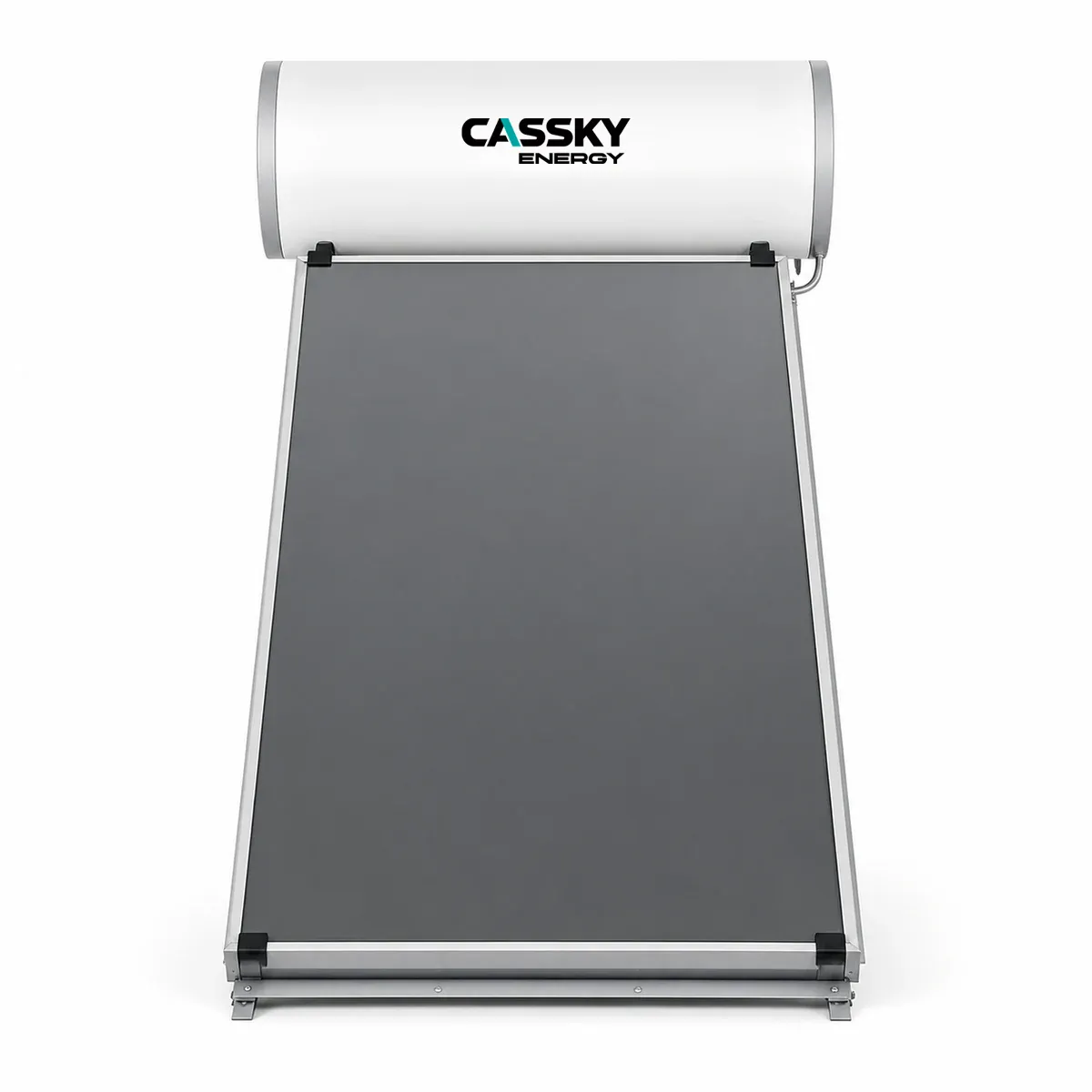
Complete mains-pressure solar hot water solution with integrated tank, collector array, and mounting frame.
View Flat Plate Pressurized Solar Water Heater →You can source the solar heat-collection component or a coordinated hot-water package from one focused product range. A flat plate solar collector gives system manufacturers and project engineers flexibility to design storage, pumping and controls around the application. A flat plate pressurized solar water heater combines the collector with a pressure-rated tank and matched installation structure for a more standardized supply package. Both options use an insulated, glazed absorber assembly to capture solar energy for water heating. Clear product separation helps you control engineering scope, simplify procurement and avoid paying for components already included elsewhere in your system.
Compare component and packaged-system options before opening the individual product pages. Final selection must use approved model data and project conditions.
*Pre-publication planning data. Replace with approved Cassky model values, pressure ratings and installation conditions before publishing.
Collector construction, tank protection and installation details determine how reliably the system performs across its service life.
High-transmission glazing admits solar radiation while protecting the absorber from weather and impact.
The treated absorber captures useful solar energy while limiting avoidable thermal radiation losses.
Consistent tube-to-absorber contact supports effective heat transfer into the circulating solar fluid.
Back and edge insulation reduce heat loss from the collector during normal operation.
Matched tank options maintain useful outlet pressure for comfortable, controlled hot-water delivery.
Available tank materials and protective components help manage water-quality and lifecycle requirements.
Mounting options accommodate flat or pitched roofs when confirmed against project structural conditions.
Clearly organized hydraulic, sensor and safety connections simplify installation, inspection and component replacement.
A flat plate solar collector is the right purchasing level when your system already includes storage, pumping, controls or auxiliary heating. You retain freedom to match collector area to a custom hydraulic design. When you need a coordinated package, the pressurized solar water heater reduces component sourcing and gives your installation team a clearer, standardized equipment boundary.
More storage does not automatically produce more usable solar hot water. Collector area, tank volume, daily draw, inlet temperature, solar exposure and backup strategy must work together. We review these inputs before recommending a flat plate solar thermal system, helping you avoid an oversized tank, insufficient collection area or excessive summer stagnation risk.
Ask for the exact flat plate solar collector curve, pressure limit, stagnation temperature and certification scope before project approval. This evidence lets your engineer compare products under equivalent conditions instead of relying on a single unsupported efficiency percentage.
Match collector area, storage and system configuration to the building, operating schedule and hot-water load you need to serve.

Standardize solar hot-water delivery across villas, townhouses and apartment projects. A flat plate pressurized solar water heater gives you a coordinated collector-and-storage package for repeatable installation, while standalone collectors support centralized systems. You can align capacity, roof layout and backup heating with occupancy instead of applying one household configuration to every building type.

Reduce conventional energy demand before boilers or heat pumps finish the hot-water load. Banks of flat plate solar collectors can feed centralized storage sized around guest occupancy and peak draw periods. For smaller properties or independent buildings, pressurized solar water heaters offer a simpler packaged route with familiar outlet pressure and clearly defined installation components.

Turn available roof area into dependable hot-water preheating for kitchens, washrooms, dormitories and staff facilities. A modular flat plate solar collector field lets you scale thermal input around daily demand, while pressure-rated storage supports practical distribution. Your project team can integrate auxiliary heating to protect service continuity during low-sunlight periods.

Lower the temperature lift required from boilers, electric heaters or heat pumps. Flat plate solar collectors can preheat process or service water when the required operating temperature matches collector capability. You gain a modular thermal input that can expand with demand, while project-specific storage and controls keep solar production aligned with operating schedules.
Use these answers to define product scope, system design and market requirements before requesting a quotation.
A flat plate solar collector captures heat and transfers it to circulating fluid, but it does not provide storage by itself. A complete flat plate pressurized solar water heater adds a pressure-rated tank, mounting structure and required system connections. Choose according to which components your project already includes and who owns the final hydraulic design.
Direct systems circulate potable water through the collector and are generally considered for climates without freezing risk and compatible water quality. Indirect systems use a separate heat-transfer fluid and heat exchanger, improving freeze protection and isolating the potable-water circuit. Climate, water chemistry, maintenance capability and local regulations should determine the final configuration.
Selection depends on daily hot-water demand, inlet and target temperatures, local solar radiation, collector orientation, shading, draw profile and desired solar contribution. Tank capacity alone is not sufficient. Provide the project location, users, operating schedule, roof information and backup heat source so collector area and storage can be evaluated as one system.
Requirements depend on the destination market and tender. Buyers commonly request Solar Keymark for Europe, SRCC-related evidence for North America, CE documentation where applicable and factory management certificates. Always verify that the certificate lists the exact model or family being purchased, remains valid and covers the claimed construction and performance data.
Freezing climates normally require an indirect loop with suitable heat-transfer fluid, correctly insulated piping, appropriate controls and verified stagnation management. Drain-back designs may suit some engineered systems. Do not rely only on a “freeze-resistant” label. Confirm the lowest design temperature, fluid specification, piping arrangement, controller logic and maintenance plan before installation.
Depending on model and quantity, OEM scope may include branding, frame finish, collector dimensions, tank casing, packaging, manuals, labels and mounting components. Certification changes may be required when construction or model identity changes. Share your target market, annual forecast, required standards, packaging needs and preferred configuration before requesting a confirmed OEM quotation.
Cassky specializes in high-performance heat pump systems and solar energy solutions, providing reliable products and customized services for global distributors, engineering companies, contractors, and brand partners.
Tell us about your product or project requirements. Our team will contact you to discuss the next step.